Introduction
Falls among older adults represent a significant public health concern, contributing to substantial morbidity, mortality, and healthcare costs globally [1, 2]. Approximately 30% of individuals aged 65 and older experience at least one fall annually, with consequences ranging from minor injuries to severe outcomes such as hip fractures and traumatic brain injuries [1, 2]. Balance impairment, a primary risk factor for falls, is often exacerbated by age-related declines in sensory, musculoskeletal, and neurological systems [3–5]. Among the multifaceted contributors to balance, foot posture has emerged as a critical yet underexplored factor influencing stability and fall risk in older adults. Abnormal foot postures, such as flat feet or high arches, can alter weight distribution, reduce proprioceptive feedback, and impair gait, thereby increasing fall susceptibility [6].
Interventions targeting foot posture, including corrective footwear, insoles, exercise programs, and sensory stimulation, have been increasingly recognised for their role in improving balance and minimising the likelihood of falls. For instance, studies suggest that properly designed footwear can improve postural stability by optimising pressure distribution and enhancing sensory input [7, 8]. Similarly, exercise interventions like Tai Chi and strength training have been shown to improve lower limb strength and coordination, which are vital for maintaining balance [9, 10]. Additionally, sensory interventions, such as foot care and electrical stimulation, may enhance proprioception, further reducing fall risk [11, 12]. Despite these findings, the effects of foot posture-specific interventions remain inconsistent across studies, necessitating a comprehensive synthesis to guide clinical practice.
Conventional medical treatments for fall prevention in older adults typically include pharmacological interventions, such as vitamin D supplementation to improve muscle strength and bone health, and bisphosphonates for osteoporosis management, alongside environmental modifications and assistive devices [13]. Physical therapy interventions commonly involve strength and resistance training to enhance lower limb power, gait training to improve walking stability, and vestibular rehabilitation for sensory integration, in community-dwelling populations [10]. These approaches provide a foundation for fall prevention, yet foot posture interventions offer a targeted complement to address specific biomechanical deficits.
Despite growing interest, notable research gaps persist regarding the comparative effects of foot posture interventions and their long-term impact on balance and fall prevention in diverse older adult populations [9–11, 14, 15]. Previous reviews have often focused on general fall prevention strategies or specific interventions like exercise, but few have systematically evaluated foot posture-specific approaches, such as balance shoes, insoles, or sensory stimulation, in the context of recent advancements [9–11]. To the best of our knowledge, this represents the first systematic review to comprehensively synthesise evidence across a broad spectrum of foot posture interventions, including footwear modifications, exercise programs, and sensory stimulation techniques, specifically targeting balance and fall risk in older adults. While narrower reviews exist on subsets of these interventions, such as intrinsic foot muscle strengthening exercises for mobility and fall reduction or the effects of specific shoe features on postural stability [16, 17], none have integrated these diverse modalities to provide actionable, comparative insights. This gap is particularly salient given the multifactorial nature of falls and the underexplored role of foot posture as a modifiable risk factor.
Moreover, the variation in study methodologies and outcome assessments hinders the establishment of standardised effective interventions. Hence, the aim of this systematic review was to provide a comprehensive analysis of the effects of foot posture interventions and inform evidence-based strategies for reducing fall risk in older adults.
Subjects and methods
For the execution of this systematic review, the Preferred Reporting Items for Systematic Reviews and Meta-Analyses guidelines (PRISMA) [18] were followed to assess the effect of foot posture interventions, and the protocol for the same is registered primarily in PROSPERO (CRD420251078664), 22nd June 2025.
Data sources and search strategy
The electronic databases along with the keywords (Medical Subject Headings) utilised are listed in Table 1. For the current review, the population, intervention, comparison, outcomes, and study design (PICOS) framework consisted of population: adults aged 60 years or older, community-dwelling or institutionalised, with or without a history of falls; intervention: interventions based on foot posture in enhancing balance and preventing falls risk including exercise therapy; comparison: studies comparing different foot postures or foot posture interventions to control groups or other foot posture interventions or to no intervention groups; outcomes: primary outcomes include measures of balance and fall risk, while secondary outcomes may include gait parameters or quality of life related to mobility; and study design: observational studies, quasi-experimental studies, and randomised controlled trials (RCTs) published in English with full-text availability. The literature search was performed from January 2020 to December 2025. Studies were excluded if they involved participants under 60 years of age or those with specific musculoskeletal, neurological, or other medical conditions that could independently impair balance or foot function. Review articles, book chapters, editorials, non-peer-reviewed publications, animal studies, and those lacking relevant information were also not considered.
Table 1
Detailed search strategy
Data extraction
Data were extracted on key study characteristics, including author details, publication year, study design, sample size, participant age, and quality assessment. Additionally, summaries of each included study covering research objectives, variables measured, comparisons conducted, and statistically significant outcomes related to foot posture interventions were compiled. To eliminate duplicates, two reviewers independently and blindly screened article titles and abstracts, manually excluding those that did not meet the inclusion criteria. Disagreements in study selection were addressed through discussion, and studies were included only after reaching a consensus. All extracted information was reviewed and organised into a tabular format for clarity and comparison.
Quality assessment
The methodological quality of the included studies was evaluated using appropriate standardised tools according to their design. The Cochrane Risk of Bias 2 (RoB 2) tool (https://www.riskofbias.info/welcome/robvis-visualization-tool) was applied to randomised controlled trials (assessing domains such as randomisation, deviations from intended interventions, missing data, outcome measurement, and selection of reported results; overall risk rated as low, some concerns, or high) [19], while the Newcastle-Ottawa Scale (NOS) was used for observational studies (scoring up to 9 stars across the selection, comparability, and outcome/exposure domains; 7 stars indicates high quality) [20]. Two reviewers independently conducted the assessments, and any discrepancies were resolved through consultation with a third reviewer. Inter-rater agreement was not formally calculated given the qualitative nature of RoB 2 domain judgements as due to the presence of a small number of judgements per category, which can result in sparse contingency tables and inflated variability in kappa estimates; however, consensus was reached efficiently with minimal discrepancies; however, initial concordance was high (92% across all domains), with consensus reached efficiently on the remaining discrepancies via discussion, resulting in 100% final agreement. Although study quality did not serve as an exclusion criterion, it was taken into account when interpreting the findings.
Data synthesis
Data was synthesised narratively, summarising findings on the relationship between foot posture, balance, and fall risk. Due to the substantial heterogeneity in study designs, interventions, participant characteristics, and outcome measures, a meta-analysis was not feasible; instead, a descriptive statistical approach (means, frequencies, mean differences, percentage improvements, and effect sizes) was employed, including qualitative summaries and quantitative tabulation of key metrics where comparable. The included studies were critically evaluated [21–32], considering influencing factors, potential biases, and limitations. A critical narrative synthesis approach was employed, integrating text, tables, and figures to summarise and interpret the findings.
Narratively, the effect sizes across the studies indicated variable but often moderate-to-large benefits for targeted interventions. For RCTs, exercise programs showed strong effects on balance, such as Baduanjin exercise yielding a standardised mean difference (SMD) of 0.85–1.04 for static/ dynamic balance improvements [24] and Cha-cha dance with a mean difference of −2.1 s in Timed Up and Go [26]; sensory interventions like transcutaneous electrical nerve stimulation (TENS) produced an SMD of 0.72 for navicular height and balance [32], while whole-body vibration had small effects (SMD −0.35 on Timed Up and Go) [31]. Footwear trials reported task-specific gains, e.g., balance shoes reducing centre of pressure (CoP) area by 15–20% (mean difference −0.12 cm2) [21]. For observational studies, associations were moderate, with near-significant higher recent fall rates among those with ill-fitting footwear (56% vs. 39%, p = 0.09) [22]; significant pre-post improvements in toe–ground contact area (1.3-fold increase) and CoP trajectory length post-foot care (p < 0.05) [25]; self-reported balance enhancements in 64% of minimal footwear users over 16 weeks [29]; reduced CoP velocity under dual-task conditions in long-term Tai Chi practitioners (mean difference −0.15 m/s, p < 0.05) [28]; and increased postural sway with soft insoles compared to barefoot/hard insoles (12–18% higher stabilometric values, p < 0.01) [30]. These effect sizes underscore potential intervention impacts, tempered by study-specific limitations.
Results
A total of 19,920 articles were initially identified from Pub-Med (n = 82), ScienceDirect (n = 2338), and Google Scholar (n = 17,500). The selection process is depicted in Figure 1.
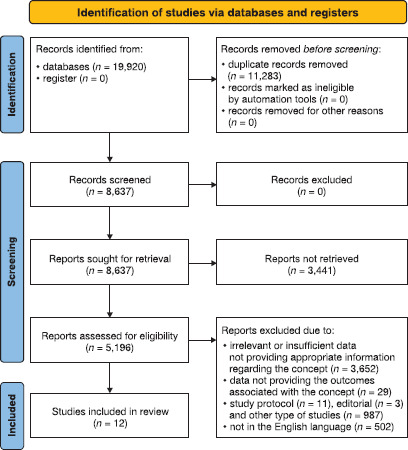
After removing 11,283 duplicates and 3441 inaccessible articles, 5196 records remained for eligibility screening. Of these, exclusions were made due to the following reasons: 3 editorials, 11 study protocols, 987 with unrelated study designs, 3652 unrelated to the defined keywords and concept, 29 lacking relevant outcome data, and 502 non-English articles. Ultimately, 12 studies comprising 5 observational studies and 7 randomised controlled trials were included in the review [21–32].
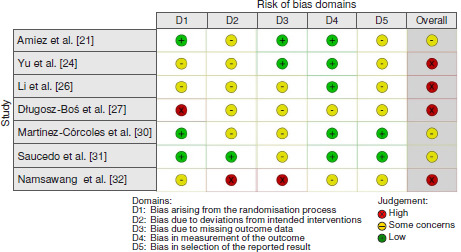
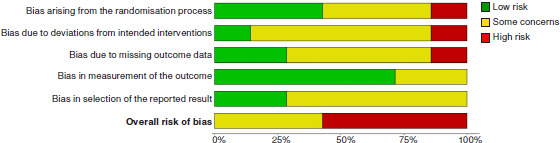
Figure 2 and Figure 3 present the assessment of quality for the RCTs.
The demographic information and the summary of the included evidence from the RCTs are detailed in Table 2.
Table 2
Summary of the included studies (RCTs)
| Study | Design | Sample size | Age of patients | Objectives | Methodology | Intervention | Key outcomes | Results | Effect sizes (point estimates) | Conclusion |
|---|---|---|---|---|---|---|---|---|---|---|
| Amiez et al., | RCT | experimental | 65–84 | To assess the effects | Participants: Elderly adults; | Experimental: Balance shoes | Balance: Bipedal eyes open/ | Bipedal balance (eyes closed): | bipedal closed-eyes | Balance shoes enhanced |
| France | group (n = 11); | years | of balance shoes | anthropometrics recorded. | (Axis Comfort Development©; | closed (CoP area, length, | Significant main effect for CoP | CoP area: | postural stability in | |
| (2021) [21] | and control | in improving postural | Equipment: Huber 3600 platform | wide soles for increased ground | speed); unipedal eyes open | area with balance shoes | MD = −1.2 cm2 | challenging conditions | ||
| group (n = 8) | stability and reducing fall | (LPG System, Valencia, France) | support) after 7–10-day | (CoP length, area); limits of | (p < 0.05), indicating a smaller | (d = 0.45, moderate); | (e.g., eyes closed, unipedal | |||
| risk from inappropriate | for CoP motion and ground | habituation. | stability (max CoP distance | CoP area compared to personal | velocity: | tasks) after a 7-to-10-day | ||||
| footwear in older adults | contacts. | Control: personal (usual daily | in 8 directions); step cadence | shoes, suggesting improved | MD = −2.1 mm/s | familiarisation period. | ||||
| Tests: Bipedal (eyes open/closed): | outdoor) shoes after 7–10-day | (steps/50 s). | stability. Significant main effect | (d = 0.52, moderate) | Volunteers reported higher | |||||
| 50 s each; CoP area (mm2); | habituation. No exercise-based | Subjective: Stability/safety | for CoP length, with balance | perceived stability and safety | ||||||
| length (mm); speed (mm/s). | interventions; the study focused | perception (yes/no); comfort/ | shoes showing reduced | with balance shoes compared | ||||||
| b 30 s; CoP length (mm). | on footwear as the primary | aesthetics (Likert scale). | displacement compared to | to personal shoes. | ||||||
| Limits of stability: Maximal | intervention (balance shoes | personal shoes. | No significant effects were | |||||||
| directional leans via screen; | vs personal shoes). | Unipedal balance: Significantly | observed in most limits of | |||||||
| peak CoP distance. | Participants underwent habitua- | smaller CoP length with balance | stability directions, | |||||||
| Step cadence: Simulated walk | tion periods: 7–10 days of daily | shoes in both experimental | suggesting task-specific | |||||||
| for dynamic balance. | wear ( 1 h active use/day; | (p < 0.05) and control sessions | benefits. | |||||||
| Procedure: 1-min rests between | average 276 ± 175 min/day for | (p < 0.05) compared to baseline. | ||||||||
| tests; standardised stance; | balance shoes, self-logged). | Limits of stability: Balance shoes | ||||||||
| repeat for errors (e.g., falls); | Testing sessions: 3 visits, each | demonstrated reduced stability | ||||||||
| open-eye: follow screen point | with 2 randomised series of | at the 315° direction compared | ||||||||
| 5 balance tests (50 s bipedal/ | to participants’ personal | |||||||||
| unipedal/step cadence; | footwear (p < 0.05), with large | |||||||||
| 8 s/direction limits of stability), | inter-volunteer variability and | |||||||||
| separated by 15 min rest; 3 min | potential lateral effects noted. | |||||||||
| walk familiarisation pre-series. | No significant changes in most | |||||||||
| directions, consistent with | ||||||||||
| prior studies comparing | ||||||||||
| modified footwear. | ||||||||||
| Yu et al., | RCT | Baduanjin | 65–79 | To evaluate the effects of | Sixty elderly participants | Baduanjin group; brisk walking | static balance (CoP) sway | Baduanjin group: Reduced CoP | two-legged eyes-open | Long-term practice of health |
| China | group (n = 20), | years | Health Qigong-Baduanjin | (10 males/10 females per group) | group; and control group | speed/area/displacement in | sway trajectory/ellipse area/ | sway: | Qigong-Baduanjin can exert | |
| (2025) [24] | brisk walking | exercise on lower limb | were randomised into Baduanjin | (no exercise beyond routine | anterior–posterior [AP]/ | max vibration in two-legged | MD = −5.49 mm | a beneficial impact on | ||
| group (n = 20), | balance in older adults | exercise, brisk walking, or | activities). | mediolateral [ML] directions; | (eyes open/closed), one-legged, | (d = 0.78, large); | improving the muscle strength | |||
| and control | no-exercise control groups to | Baduanjin intervention: | centre of gravity [CoG] sway | and tandem stances vs. brisk | ellipse area: | of the lower limb joints and | ||||
| group (n = 20) | evaluate exercise effects on | Traditional Chinese Qigong | trajectory length/ellipse area/ | walking/control (p < 0.05), more | MD = −26.88 cm2 | ankle joint flexibility, improving | ||||
| balance. Intervention groups | routine emphasising slow, | max vibration/tilt angle/ | centralised CoP (p < 0.05). | (d = 0.92, large) | the static balance ability of the | |||||
| completed a 16-week program, | coordinated movements | eccentricity/Delta X/Delta Y | Overall, the results showed that | elderly, and consequently | ||||||
| with balance assessments | (e.g., 2nd pose: knee bending/ | under eyes open/closed | dynamic balance and static | reducing their risk of falling. | ||||||
| performed across all. | semi-squatting with hip/knee/ | conditions in two-legged/ | balance in CTG were | |||||||
| ankle flexion-extension and | one-legged/tandem stances) | significantly improved after the | ||||||||
| weight shifting). Coach-led | intervention. The findings also | |||||||||
| sessions (70–90 min each) | indicated that improvements | |||||||||
| synchronised to music, after- | were more pronounced during | |||||||||
| noons on days 2, 4, 6, 7 weekly | left foot trials, and in tests | |||||||||
| (4×/week), for 16 weeks. | performed with the eyes closed. | |||||||||
| Progression via full routine | ||||||||||
| mastery; focus on lower limb | ||||||||||
| stability/coordination. | ||||||||||
| Brisk walking intervention: | ||||||||||
| Supervised aerobic walking at | ||||||||||
| controlled moderate intensity. | ||||||||||
| Sessions (35–40 min each) led | ||||||||||
| by staff, afternoons on days | ||||||||||
| 1, 3, 5, 6 weekly (4×/week), | ||||||||||
| for 16 weeks. Speed/duration | ||||||||||
| standardised for consistency. | ||||||||||
| Li et al., | RCT | Cha-cha | 60–65 | To evaluate the effects of | Forty healthy elderly | Cha-cha dance intervention: | Dynamic balance (score, | Enhanced dynamic/static | dynamic score: | A 12-week Cha-cha dance |
| Korea | training group | years | 12-week Cha-cha dance | participants | Structured Latin dance routine | maximum rotation speed | balance in CTG (p<0.05; | MD = +3438 | class or program alone can | |
| (2022) [26] | (n = 20), and | training on balance in older | (balanced baseline) | emphasising moderate rhythm, | [Rot.Speed Max], rotation | improvements in sway/velocity, | (d = 1.92, large); | be an effective intervention to | ||
| control group | adults and provide | were randomised into | symmetrical lower-body | speed via rotational | e.g., left foot > right, closed | static C90 area (EO): | improve balance in the elderly. | |||
| (n = 20) | evidence for its promotion | Cha-cha training (n = 20: | movements (e.g., basic steps, | platform test). Static balance | eyes > open); significant gains | MD = −166.9 mm2 | ||||
| 12 weeks, 3×/week, | turns, hip actions for ankle/knee/ | (C90 area, trace length, | in one-legged/tandem stances | (d = 0.72, large) | ||||||
| 90 min/session) or control | hip coordination and weight | standard deviation [SD] | (p < 0.01). Overall, the results | |||||||
| (n = 20: usual routines) | shifting). Professional | velocity, SD X/Y deviation | showed that dynamic balance | |||||||
| groups. Dynamic and static | instructor-led group classes | via force platform in eyes- | and static balance in CTG were | |||||||
| balance assessed pre- and | (90 min each, including | open/closed conditions for | significantly improved after | |||||||
| post-intervention. | 10-min warm-up/cool-down, | double-leg, single-leg | the intervention. Additionally, | |||||||
| progressive skill-building), | left/right, and tandem | the findings indicated that | ||||||||
| 3×/week (e.g., non-consecutive | stances). | improvements were more | ||||||||
| days for recovery), for 12 weeks | pronounced during left foot | |||||||||
| (total 36 sessions). Intensity: | trials, and in tests performed | |||||||||
| Low-moderate; progression | with the eyes closed. | |||||||||
| via mastery of sequences. | ||||||||||
| Control group maintained | ||||||||||
| usual daily activities without | ||||||||||
| intervention. | ||||||||||
| Długosz-Boś | RCT | experimental | over 60 | To assess the effect of | Fifty women > 60 years were | Pilates intervention: Mat-based | Functional mobility (TUG). | After the training, significantly | LoS: MD = +8.2% | Pilates training affected |
| et al., | group (n = 30), | years | Pilates exercises on | randomised to Pilates (n = 30: | Pilates exercises focusing on | Static balance (OLST). | decreased values of the surface | (d = 0.68, moderate); | the participants’ balance | |
| Poland | and control | balance and fall risk | 2×/week, 3 months) or control | core stability, postural | Plantar pressure distribution | of the ellipse (p < 0.01) and | m-CTSIB eyes-closed: | by improving LOS and | ||
| (2021) [27] | group (n = 20) | in older women | (n = 20: usual routines) groups. | alignment, and controlled | (Freestep baropodometric | mean values of velocity | MD = −1.5 mm/s | reducing fall risk. | ||
| Pre/post assessments: TUG, | movements (e.g., breathing- | platform: ellipse surface/ | (p < 0.05) for the right foot in | (d = 0.55, moderate) | ||||||
| OLST, baropodometry | integrated sequences targeting | velocity for left/right foot). | the experimental group were | |||||||
| (Freestep platform), and | lower limbs, spine, and | Postural stability (Biosway | observed. The LoS test | |||||||
| balance (Biosway platform). | proprioception). | platform: LoS; m-CTSIB on | (p < 0.01) and m-CTSIB, | |||||||
| Group sessions led by | unstable surface eyes open/ | conducted on an unstable | ||||||||
| a certified instructor | closed). | surface with eyes closed, | ||||||||
| (60 min each: Warm-up, main | showed statistically significant | |||||||||
| exercises, cool-down), | improvements in the | |||||||||
| 2×/week (non-consecutive | experimental group (p < 0.05). | |||||||||
| days), for 3 months (total | In contrast, no significant | |||||||||
| 24 sessions). | changes were observed in the | |||||||||
| Progression: Beginner level, | control group for any of the | |||||||||
| advancing via repetitions/holds | measured parameters. | |||||||||
| as tolerated; intensity low- | ||||||||||
| moderate (self-paced, | ||||||||||
| no equipment beyond mats). | ||||||||||
| Control group maintained | ||||||||||
| everyday activities without | ||||||||||
| additional exercise or | ||||||||||
| rehabilitation. | ||||||||||
| Martínez-Córcoles | RCT | barefoot (n = 31); | 65 years | To assess the effects of hard vs. soft insoles on static | Three conditions tested in the lab: barefoot (no insoles), soft | No exercise-based interventions. Protocol: 30 s trial/condition | Static postural control (EA length/surface in cm2; | Barefoot > hard > soft insoles for postural control (all p < 0.01); | soft insole CoP area (eyes closed): | Hard and soft insoles show no improvement in postural |
| et al., | hard-density | balance in older adults | gel insoles (Sidas cushioning | (discard first 10 s, average last | sway velocity/frequency | soft insoles increased EA/sway | MD = +5.2 cm2 | control compared to barefoot | ||
| Spain | insole (n = 31); | compared to barefoot | gel slim, Voron, France), hard | 20 s; 500 Hz sampling); | via Gyko inertial sensor) | velocity. No improvement over | (d = −0.38, | standing. The results indicate | ||
| (2024) [30] | soft-density | conditions | insoles (Sidas Winter+, Voron, | 3 sessions (1 week apart with | in bipedal stance, | barefoot for either insole type; | small negative); | that the use of soft insoles may | ||
| insole (n = 31) | France). Randomised via | washout); no training/wear | eyes open/closed. | soft density detrimental | velocity: | negatively affect balance while | ||||
| envelopes across three 1-week- | beyond testing. | (increased instability). Barefoot | MD = +3.1 mm/s | standing. The density of the | ||||||
| apart sessions. Participants | condition showed significant | (d = −0.45, | materials in the insoles | |||||||
| stood bilaterally (anthropometric | improvements in postural | small negative) | emerges as a significant factor | |||||||
| stance, 30 s/condition) with | stability compared to both insole | influencing postural control. | ||||||||
| eyes open (fixating 2-m at | types, particularly in the eyes- | |||||||||
| a target) or closed; Gyko inertial | open condition. In the eyes- | |||||||||
| sensor (Microgate, Spain) | closed (no-vision) condition, | |||||||||
| harnessed on the back. Data | barefoot stability improvements | |||||||||
| discarded for movement/loss | were more pronounced com- | |||||||||
| of balance. Outcomes: | pared to soft insoles but less | |||||||||
| stabilometric parameters (e.g., | so compared to hard insoles. | |||||||||
| ellipse area, AP/ML stability). | Soft insoles demonstrated the | |||||||||
| highest instability along both the | ||||||||||
| anterior-posterior and ML axes. | ||||||||||
| Although they significantly | ||||||||||
| improved stabilometric parame- | ||||||||||
| ters such as a reduced ellipse | ||||||||||
| area compared to barefoot | ||||||||||
| conditions, they did not provide | ||||||||||
| greater overall stability than | ||||||||||
| being barefoot. Hard insoles: | ||||||||||
| Demonstrated modest stability | ||||||||||
| improvements compared to | ||||||||||
| barefoot, especially in | ||||||||||
| eyes-open conditions. | ||||||||||
| Provided better control over | ||||||||||
| pronation movement compared | ||||||||||
| to soft insoles, which adapt | ||||||||||
| more to foot posture. Hard | ||||||||||
| insoles were more effective | ||||||||||
| than soft insoles in enhancing | ||||||||||
| postural stability, supporting | ||||||||||
| their potential to reduce fall risk. | ||||||||||
| Soft insoles may increase | ||||||||||
| muscular demand, potentially | ||||||||||
| contributing to instability | ||||||||||
| in older adults. | ||||||||||
| Saucedo | RCT | WBV group | 65 | To evaluate whether 6-week | Twenty-four independent older | WBV intervention: Side-alternat- | Static balance (BBS composite | No significant between-group | BBS: | Findings revealed that six |
| et al., | (n = 9); and | years | WBV training improves | adults were randomised to WBV | ing vibration platform (Galileo | score, max 56). Dynamic fall | differences in BBS composite | MD = +0.5 points | weeks of whole-body vibration | |
| United States | control group | balance/fall outcomes and | (20 Hz, 3×/week) or control | Med-L; anteroposterior rotation | risk (treadmill slip-induced fall | scores or treadmill fall rates | (d = 0.12, trivial); | was not effective in improving | ||
| (2022) [31] | (n = 8) | sustains benefits 2 months | (audio simulation) groups. | axis, barefoot to minimise damp- | rates [%]: 5 unannounced | post-training or at 2-month | falls: | balance scores or fall rates. | ||
| post-training | Balance (BBS composite) and | ing, knees flexed 20° for safety/ | backward slips at preferred | retention (p > 0.05). | MD = −0.1 | |||||
| fall rates (treadmill testing) | comfort). Fixed parameters: | walking speed on ActiveStep | No retention of benefits. | (d = 0.08, trivial) | ||||||
| assessed pre-intervention, | 20 Hz frequency, 1.3 mm ampli- | treadmill, classified by COM | ||||||||
| immediately post, | tude (low-intensity to stimulate | position relative to | ||||||||
| and 2 months later. | stretch reflex/muscle spindles | trailing heel). | ||||||||
| without excess resonation). | ||||||||||
| Protocol: intermittent (5 cycles | ||||||||||
| of 1-min vibration + 1-min rest; | ||||||||||
| total 10 min/session), supervised | ||||||||||
| individually, 3×/week ( 24 h rest | ||||||||||
| between), for 6 weeks (18 ses- | ||||||||||
| sions total). Progression: none | ||||||||||
| (fixed); warm-up 10 min regular | ||||||||||
| treadmill walking. | ||||||||||
| Control group intervention: | ||||||||||
| Sham: identical protocol/timing | ||||||||||
| (10 min/session, 3×/week, | ||||||||||
| 6 weeks) but audio recording | ||||||||||
| of platform motor noise only | ||||||||||
| (no vibration); barefoot stance on | ||||||||||
| stationary platform, knees at 20°. | ||||||||||
| Namsawang | RCT | TENS and | 65 | to investigate the effects of | Forty-eight participants | TENS intervention: stimulation | Foot arch morphology (NDT, | increased navicular height | navicular height: | TENS intervention over |
| et al., | short foot | years | TENS on navicular height, | (65–75 years) were randomised | (EV-806 device: 100 Hz frequency, | mm: weight-bearing minus | (p < 0.05) both groups; | MD = +2.1 mm | 4 weeks significantly improved | |
| Thailand | exercise group | balance, and fear of falling | to TENS or control groups. | 200 μs pulse duration) on | non-weight-bearing navicular | TENS > control p < 0.05; and | (d = 0.62, moderate); | navicular height, balance, and | ||
| (2021) [32] | (n = 24), and | Navicular height, balance, and | abductor hallucis muscle | height). Static balance (peak | improved postural balance | fear scale: | reduced fear of falling in | |||
| control group | fear of falling assessed pre- | (bipolar: active electrode on | weight [kg] in anterior/ | in all 4 directions (front/back/ | MD = −3.2 points | community-dwelling elderly | ||||
| (n = 24) | and post-4-week training. | motor point, dispersive on | posterior/mediolateral | left/right p < 0.05) | (d = 0.48, small) | compared to the control group, | ||||
| 1st metatarsal head). Performed | directions via force platform | likely due to enhanced plantar | ||||||||
| standing (equal weight distribu- | biofeedback). Fear of falling | foot intrinsic muscle strength | ||||||||
| tion), intensity to maximal con- | (Falls Efficacy Scale | and proprioceptive stimulation. | ||||||||
| traction without pain/discomfort; | International score: 16–64, | Moreover, short foot exercises | ||||||||
| 15 min/session ×2 sets (2-min | higher = greater fear). | also improved navicular height | ||||||||
| rest), combined with short foot | and balance but were less | |||||||||
| exercise holds. Home-based, | effective than TENS in | |||||||||
| 3×/week (non-consecutive days), | reducing fear of falling. | |||||||||
| for 4 weeks (12 sessions; | ||||||||||
| weekly phone follow-up for | ||||||||||
| adherence logging). | ||||||||||
| Control intervention: Short foot | ||||||||||
| exercise (standing: contract | ||||||||||
| intrinsic foot muscles to draw | ||||||||||
| metatarsal heads toward | ||||||||||
| calcaneus without toe flexion/ | ||||||||||
| heel lift, hold 5 s ×15 reps × | ||||||||||
| 2 sets with 2-min rest. Home- | ||||||||||
| based, 3×/week, for 4 weeks | ||||||||||
| (12 sessions; weekly phone | ||||||||||
| follow-up). | ||||||||||
| RCT – randomised controlled trial | CoG – centre of gravity | OLST – One Leg Stance | WBV – whole-body vibration | |||||||
| CoP – centre of pressure | CTG – Cha cha training group | LoS – Limits of Stability | BBS – Berg Balance Scale | |||||||
| AP – anterior–posterior | EO – eyes open | m-CTSIB – Modified Clinical Test of Sensory Interaction on Balance | COM – centre of mass | |||||||
| ML – mediolateral | TUG – Timed Up and Go | EA – ellipse area | TENS – transcutaneous electrical nerve stimulation | |||||||
| NDT – navicular drop test |
The quality of the included observational studies as per the NOS is reported in Table 3.
Table 3
Quality of the included observational studies
| Study | Exposed represen-tatives | Selection of non-ex-posed cohort | Ascertain-ment of exposure | Outcome of interest was not present at the start of the study | Compara-bility of cohorts | Assess-ment of outcome | Sufficient follow-up | Adequacy of follow-up of cohorts | Total | Quality |
|---|---|---|---|---|---|---|---|---|---|---|
| O’Rourke et al. [22] | * | * | * | NA | * | * | * | * | 7/9 | high |
| Sidaway [23] | * | * | * | * | * | * | * | * | 8/9 | high |
| Yamashita et al. [25] | * | * | * | * | * | * | * | * | 8/9 | high |
| Li et al. [28] | * | * | * | * | ** | * | NA | NA | 7/9 | high |
| Futrell et al. [29] | * | NA | * | * | NA | * | * | * | 6/9 | moderate |
The demographic information and the summary of the included evidence from the observational studies are detailed in Table 4.
Table 4
Summary of the included studies (observational studies)
| Study | Design | Sample size | Age of patients | Objectives | Methodology | Intervention | Key outcomes | Results | Effect sizes (point estimates) | Conclusion |
|---|---|---|---|---|---|---|---|---|---|---|
| cross- | 111 | 81.6 years | to examine the proportion of | Demographics recorded: age, | No intervention. Proportion with | Primary: Proportion with | 72% ill-fitting shoes on both feet | mismatch: | Wearing incorrectly fitting shoes | |
| sectional | (range | older adults attending a geriatric | mobility, medications, co-habita- | correctly fitting footwear | correctly fitting footwear | (mean toe-gap 18.6 mm, | MD = +8.6 mm vs ideal | and shoes with unsafe features | ||
| 63–99, | day hospital who were wearing | tion, home footwear, falls history. | (10–15 mm toe-to-shoe gap | (10–15 mm toe-to-shoe gap | SD = 9.6; outside recommended | (d = N/A, descriptive); | was common among older | |||
| SD = 7.5) | incorrectly sized shoes | Footwear measurements: shoe | on 1 foot; 28% met criterion). | on 1 foot; 28% met criterion). | 10–15 mm range); 90% with | no ES for TUG/NEADL | adults attending geriatric day | |||
| size (internal gauge), foot length | Footwear characteristics (e.g., | Secondary: Footwear | smooth/partly/fully worn soles; | (p > 0.05) | services in this study. Numerous | |||||
| (SATRA stick, mm); self-reported | fit, fixation, sole rigidity/tread via | characteristics (e.g., fit, fixation, | 67% reported slippers at home | participants reported wearing | ||||||
| O’Rourke et al., Ireland (2020) [22] | size; characteristics via FAF. | FAF; functional mobility (TUG); | sole rigidity/tread via FAF); | (common indoor footwear). | slippers at home. | |||||
| Functional measures: independ- | independence (NEADL); falls | functional mobility (TUG); | No association with age, TUG | |||||||
| ence (Nottingham Extended | history (past 1/6 months); | independence (NEADL); falls | score, or NEADL independence | |||||||
| ADL Scale); mobility (TUG test). | self-reported home footwear | history (past 1/6 months); | (p > 0.05). Mean difference | |||||||
| Primary outcome: proper fit | were assessed. | self-reported home footwear. | between shoe length and foot | |||||||
| (toe gap 10–15 mm on 1 foot) | length was 18.6mm (SD = | |||||||||
| vs. ill-fitting (both feet); | 9.6mm). In total, 72% of partici- | |||||||||
| comparisons between groups | pants wore improperly fitting | |||||||||
| footwear on both feet, 90% had | ||||||||||
| shoes with smooth, partially | ||||||||||
| worn, or completely worn-out | ||||||||||
| soles, and 67% reported wearing | ||||||||||
| slippers at home. No significant | ||||||||||
| associations were found between | ||||||||||
| footwear fit and participant age, | ||||||||||
| TUG scores, or NEADL scores. | ||||||||||
| single-group | experimental | over 70 | to evaluate beam walking’s | Participants completed pretests: | Beam walking intervention: | fear of falling (self-report | At pretest, 83% of the partici- | DGI: | Beam training appears to be | |
| pre-post | group | years | effects on gait velocity and fall | fear of falling questionnaire, | Participants walked heel-to-toe | questionnaire), balance confi- | pants reported they were some- | MD = +12 points | a simple intervention that can | |
| design | (n = 25); one | risk in older adults | ABC scale, DGI, and normal/fast | along 6 m wooden beams | dence (ABC scale), dynamic | what afraid of falling, while at the | (d = 1.15, large); | improve dynamic mediolateral | ||
| participant | walking trials; then performed | (2 cm thick) of progressively | balance (DGI), gait parameters | retention test, 37% were some- | velocity: | stability, consequently reducing | ||||
| dropped out, | beam walking (decreasing | decreasing widths (21 cm, | (velocity, cadence, stride length/ | what afraid of falling. ABC scores | MD = +0.12 m/s | the falls risk of older adults. | ||||
| yielding | widths). Intervention: beam | 18 cm, 15 cm, 12 cm, 9 cm, | variability, stride width/variability | increased notably from a pretest | (d = 0.85, large) | |||||
| n = 24 for | practice 2×/week for 4 weeks. | 6 cm), starting at the widest | via computerised gait mat) | mean of 61% to a retention test | ||||||
| post- and | Post-assessments: immediately | feasible width (determined by | beam-walking performance | mean of 90%. DGI also showed | ||||||
| retention | after and 1 week later | 3 successful passes without | (narrowest beam width achieved | significant improvement following | ||||||
| analyses | stepping off). Sessions lasted | for 3 passes), falls history | the beam-walking intervention. | |||||||
| 20 min, occurred twice weekly | (self-reported over 6 months | Gait analysis indicated marked | ||||||||
| Sidaway, United States (2025) [23] | for 4 weeks (total 8 sessions), | pre- and post-training) | enhancements, with increases in | |||||||
| with progression to narrower | stride length and walking speed, | |||||||||
| beams upon mastery (3 conse- | alongside reductions in stride | |||||||||
| cutive passes). Rest breaks | length and stride width variability | |||||||||
| were allowed for fatigue; safety | after the training. Improved ABC | |||||||||
| guarding was provided. Training | scores (pre: M = 61% – retention: | |||||||||
| began at the prior session’s | M = 90%; +29 points, p < 0.05); | |||||||||
| ending width; those mastering | reduced fear of falling (pre: 83% | |||||||||
| the narrowest (6 cm) beam | somewhat afraid – retention: | |||||||||
| continued there. | 37%; 46% decrease, p < 0.05); | |||||||||
| gait velocity and stride length | ||||||||||
| increased significantly (p < 0.05). | ||||||||||
| DGI improved significantly (pre: | ||||||||||
| not specified – post: +3–4 points | ||||||||||
| implied, p < 0.05, stride length/ | ||||||||||
| width variability decreased | ||||||||||
| significantly (p < 0.05). Beam | ||||||||||
| walking: Narrowest width | ||||||||||
| completed improved (e.g., | ||||||||||
| from 15 cm to 9 cm average, | ||||||||||
| p < 0.05). | ||||||||||
| pre-post | 48 | 66–98 | to examine the effect of foot | Forty-eight participants received | No exercise-based interventions. | Postural control (CoP total | Increased toe ground contact | toe contact: | The study highlights the vital | |
| intervention | years | care on postural control | monthly foot care intervention | The study focused on foot care: | trajectory length; integrated | area (1.3 × post-intervention vs. | MD = +1.3 cm2 | role of foot care in enhancing | ||
| design with | in frail older adults | over 5 months. Pre/post | monthly nurse-administered | triangle area; rectangular area; | pre; p < 0.05); improved anteri- | (d = 0.71, moderate); | postural control, with broader | |||
| no separate | assessments: 45-s static | sessions (5 total over 5 months) | AP/MLRoM via stabilometer). | or-posterior CoP motion control | AP trajectory: | implications for the ageing | ||||
| control group | eyes-open stance on | including foot/toenail examina- | Plantar pressure distribution | during static open-eyed standing | MD = −12.4 mm | population’s well-being and | ||||
| stabilometer; CoP analysis | tion, debridement of calluses/ | (toe ground contact area via | (reduced sway range; p < 0.05); | (d = 0.59, moderate) | safety. | |||||
| (total path length, integrated | hyperkeratosis, nail trimming/ | pixel-based software analysis). | total trajectory length decreased, | |||||||
| triangular area, rectangular area, | filing, corn/plaster removal, | rectangular area decreased, and | ||||||||
| AP/ML movement range). | moisturising with cream, and | no significant changes in ML | ||||||||
| education on self-care. Each | direction or other CoP metrics | |||||||||
| session lasted 30–60 min | was observed. Results indicated | |||||||||
| Yamashita et al., Japan (2024) [25] | (inferred from routine protocols); | that foot care significantly | ||||||||
| performed at medical | increased toe ground contact | |||||||||
| institutions/city health centres. | area by 1.3 times and improved | |||||||||
| AP motion control during static | ||||||||||
| standing. Enhanced postural | ||||||||||
| control resulted from improved | ||||||||||
| skin condition due to foot care | ||||||||||
| that intensified mechanoreceptor | ||||||||||
| signal input and improved | ||||||||||
| postural control output. These | ||||||||||
| findings underscore the potential | ||||||||||
| for reducing fracture risks in | ||||||||||
| older adults through proactive | ||||||||||
| foot care. | ||||||||||
| cross- | Tai Chi group | 65 years | to evaluate whether Tai Chi | Fifteen Tai Chi practitioners | No acute intervention; study | Gait kinematics (walking velocity; | Tai Chi group: improved walking | foot clearance: | Tai Chi practitioners have lower | |
| sectional | (n = 13); and | practitioners have lower | ( 10 years experience) and | compared chronic effects of | foot clearance; trunk/head tilt | velocity under DT stair descending | MD = +1.2 cm | fall risks under DT conditions | ||
| comparative | no-exercise | dual-task fall risks during stair | 15 no-exercise controls | long-term Tai Chi practice | angles in the sagittal plane). | (p < 0.05); reduced CoM-CoP IA | (d = 0.82, large); | during stair descending. | ||
| study | group (n = 12) | descending compared | descended a 6-step staircase | (mind-body exercise integrating | Dynamic postural stability | AP (p < 0.05); group effects in | CoM-CoP IA (ML): | |||
| to non-exercisers. | under single-task and dual-task | slow movements, balance/ | (CoM-CoP IA in APML directions | foot clearance (p < 0.05), trunk/ | MD = −2.1° | |||||
| conditions. Data captured via | flexibility, cognitive focus, 10 | during single-support phase). | head tilt (p < 0.05/0.01), ML | (d = 0.94, large) | ||||||
| 8-camera motion system and | years duration, 3 sessions/ | CoM–CoP IA (p < 0.01). DT effect | ||||||||
| 2 force plates. | week, 30 min/session) vs. | on foot clearance (p < 0.01). | ||||||||
| sedentary lifestyle. | The findings revealed significant | |||||||||
| Assessment: 6-step stair | group-by-DT interactions for | |||||||||
| Li et al., China (2021) [28] | descent (17 cm riser/29 cm | walking velocity (p< 0.05) and | ||||||||
| tread) at self-selected pace; | the CoM-CoP IA in the AP | |||||||||
| DT added serial 7s subtraction | direction (p < 0.05). Group | |||||||||
| from 3-digit number (verbal | differences were also noted in | |||||||||
| response). Data via 8-camera | foot clearance (p < 0.05), trunk | |||||||||
| motion capture (100 Hz) + force | tilt (p < 0.05), head tilt (p < 0.01), | |||||||||
| plates (1000 Hz); 400 m | and CoM-CoP IA in the | |||||||||
| warm-up walk; familiarisation | mediolateral direction (p < 0.01). | |||||||||
| trials | A significant effect of the DT | |||||||||
| condition was observed only in | ||||||||||
| foot clearance (p < 0.01). While | ||||||||||
| both groups exhibited a more | ||||||||||
| cautious gait under DT condi- | ||||||||||
| tions, participants practicing Tai | ||||||||||
| Chi were less affected by the DT | ||||||||||
| challenge compared to their | ||||||||||
| non-exercising counterparts. | ||||||||||
| pre-post | minimal | 65 years | To assess long-term effects | Twenty-four adults 65 years | No exercise-based intervention. | Intrinsic foot muscle morphology | No overall significant change in | foot clearance: | Older adults reported generally | |
| design with | footwear | and impressions of minimal | progressively used minimal | Progressive minimal footwear | CSA of abductor hallucis, flexor | CSA of 5 intrinsic foot muscles | MD = +1.2 cm | positive experiences with | ||
| a single | group | footwear in older adults | footwear in daily activities over | use: Xero Aptos shoes | hallucis brevis, flexor digitorum | after 16 weeks. 13/24 (54%) had | (d = 0.82, large); | the minimal footwear, with | ||
| group | (n = 24) | 16 weeks. Intrinsic foot muscle | (zero-drop, wide toe box, | brevis, quadratus plantae, | clinically meaningful abductor | CoM-CoP IA (ML): | self-reported improvements | |||
| cross-sectional area (5 muscles) | minimal cushioning) worn | abductor digiti minimi via | hallucis CSA increase (> 5% | MD = −2.1° | in balance and foot awareness/ | |||||
| measured via ultrasound at | 5 days/week for 16 weeks | ultrasound. | threshold, p < 0.05) subgroup. | (d = 0.94, large) | sensation. The wear schedule | |||||
| baseline, 8, and 16 weeks; | during daily activities/walking. | Fall risk (Mini-BESTest total | No differences in age/grip/foot | may have been too conservative | ||||||
| semi-structured interviews | Dosage: Intentional walking | score). | structure/fall risk between | or not long enough to produce | ||||||
| assessed perceptions, wear | 3×10 min/day (weeks 1–2) | Foot structure (hallux valgus | responders/non-responders | foot muscle hypertrophy, but | ||||||
| schedule experiences, and | progressing to 30 min/day | angle; navicular drop). | (p > 0.05). 68.1% positive | subjective reports suggest | ||||||
| impacts on orthopaedic pain, | (weeks 11–16); daily wear 1–2 h | Qualitative perceptions | experience; 63.6% improved | beneficial neuromuscular | ||||||
| balance, and foot sensation. | (weeks 1–2) to 7 h (weeks | (semi-structured interviews: | balance; 72.7% enhanced foot | adaptations and sensory | ||||||
| 11–16). Delivery: Initial fitting/ | footwear impressions, wear | awareness/sensation (p < 0.05). | changes occurred. | |||||||
| instruction (week 0), check-ins | schedule adherence/difficulty, | 77.2% no pain aggravation/new | ||||||||
| (weeks 1, 4); self-monitored via | effects on orthopaedic pain, | pain; and 77.2% easy schedule | ||||||||
| journal; gait education on shorter | balance, foot awareness/ | adherence. Across the cohort, | ||||||||
| strides to reduce heel impact. | sensation). | there was no significant | ||||||||
| difference in CSA of the | ||||||||||
| 5 muscles after 16 weeks of | ||||||||||
| minimal footwear use. Thirteen | ||||||||||
| participants had clinically | ||||||||||
| meaningful increased CSA | ||||||||||
| of the abductor hallucis muscle. | ||||||||||
| These positive responders | ||||||||||
| had no significant differences | ||||||||||
| in age, grip strength, foot | ||||||||||
| structure, or fall risk scores | ||||||||||
| compared to participants with | ||||||||||
| little-to-no CSA change. | ||||||||||
| Interview results indicated | ||||||||||
| Futrell et al., United States (2024) [29] | a generally positive experience | |||||||||
| with minimal footwear for | ||||||||||
| 68.1% of the cohort. A majority | ||||||||||
| of participants reported ease | ||||||||||
| with the progressive wear | ||||||||||
| schedule (77.2%), experienced | ||||||||||
| no worsening of pre-existing | ||||||||||
| conditions or development of | ||||||||||
| new pain (77.2%), and noted | ||||||||||
| improvements in balance | ||||||||||
| (63.6%) and foot awareness or | ||||||||||
| sensation (72.7%) while using | ||||||||||
| minimal the footwear. Although | ||||||||||
| 22.8% initially found the | ||||||||||
| schedule inconvenient during | ||||||||||
| the first few weeks, adherence | ||||||||||
| to the recommended | ||||||||||
| progression led to minimal | ||||||||||
| or no adverse effects. | ||||||||||
| FAF – footwear assessment form | ML – mediolateral | |||||||||
| ADL – Activities of Daily Living | RoM – range of motion | |||||||||
| TUG – Timed Up and Go | ST – single-task | |||||||||
| NEADL – Nottingham Extended Activities of Daily Living | DT – dual-task | |||||||||
| N/A – not applicable | CoM – centre of mass | |||||||||
| ABC – Activities-specific Balance Confidence | IA – inclination angle | |||||||||
| DGI – Dynamic Gait Index | APML – Anterior–Posterior and Mediolateral | |||||||||
| CoP – centre of pressure | CSA – Cross-Sectional Area | |||||||||
| AP – anterior–posterior |
Discussion
This systematic review synthesised evidence from twelve studies (seven RCTs and five observational studies), evaluating the effects of foot posture interventions on balance and fall risk in older adults. The findings indicate that interventions, including balance shoes, minimal footwear, exercise interventions, and sensory stimulation, generally improve balance and reduce fall risk, though with varying efficacy. Balance shoes enhanced postural stability in challenging conditions by reducing the CoP area and displacement, with participants noting improved perceived stability. Minimal foot-wear yielded subjective improvements in balance and foot awareness, despite the lack of significant muscle hypertrophy, suggesting neuromuscular adaptations. Exercise-based interventions, such as Baduanjin, Cha-cha dance, Tai Chi, Pilates, and beam walking, consistently improved static and dynamic balance by enhancing lower limb strength, coordination, and proprioception. Sensory interventions, including foot care and TENS, significantly improved postural control through enhanced mechanoreceptor input, while whole-body vibration showed limited efficacy. Conversely, ill-fitting foot-wear and soft insoles were associated with increased instability, underscoring the need for tailored interventions [21–32]. These benefits likely arise from shared physiological mechanisms, such as augmented plantar mechanoreceptor signalling to the somatosensory cortex for anticipatory postural adjustments [33], and biomechanical adaptations like increased ankle torque generation to minimise mediolateral CoP excursions during perturbations [34]; neuromuscular enhancements, including greater lower-limb muscle spindle activation and inter-joint coordination, further counteract age-related sarcopenia and sensory decline [35]. Heterogeneity in task demands (e.g., static vs. dynamic) moderated outcomes, with larger gains in challenging conditions reflecting improved reactive strategies.
Footwear modifications and balance
Amiez et al. [21] demonstrated that specifically designed balance shoes significantly improved postural stability in challenging conditions, such as eyes-closed bipedal and uni-pedal tasks, by reducing the CoP area and displacement. Participants reported higher perceived stability and safety, suggesting that balance shoes could be effective after a short familiarisation period. However, no significant improvements were observed in most limits of stability directions, indicating task-specific benefits [21]. Physiologically, the shoes’ textured soles likely amplify fast-adapting mechanoreceptors (e.g., Meissner corpuscles), enhancing somatosensory feedback and anticipatory ankle eversion strategies to stabilise the base of support [33]; biomechanically, this reduces frontal-plane CoP velocity, a critical factor in 40% of lateral falls [34]. In the study by Amiez et al. [21], the control condition (participants’ usual footwear) reflected real-world daily use; however, this may have included ill-fitting shoes, which are common in older adults and may contribute to increased instability, with no observed reduction in CoP sway or perceived safety. In contrast, task-specific stability gains in the frontal plane (key for lateral falls), high acceptability (comfort/aesthetics rated positively by 81–100%), and them being a low-cost, non-pharmacological adjunct to prevent home/outdoor falls were observed with balance shoes. The limitations involve a lack of effects on most stability limits, step cadence, or eyes-open bipedal balance, the benefits requiring 7–10 days of familiarisation, potential laterality bias (e.g., 315° anomaly), and the small, gender-imbalanced sample that limits generalis-ability to frail/male elderly.
O’Rourke et al. [22] reported that 72% of older adults receiving geriatric care were wearing improperly fitted footwear, with 90% using shoes with worn-out soles and 67% commonly wearing slippers at home. Ill-fitting footwear was not directly associated with balance measures like the Timed Up and Go (TUG) score, but the high prevalence of unsafe foot-wear highlights a potential risk factor for falls, emphasising the need for proper footwear assessment and intervention. Mechanistically, mismatches alter the forefoot pressure distribution, dampen the Golgi tendon organ signals and impair the reactive hip abductor torque, thereby amplifying medio-lateral sway and fall odds by 1.2–1.8× [36]. Futrell et al. [29] investigated the long-term effects of minimal footwear over16 weeks. While no significant changes in intrinsic foot muscle size were observed, 68.1% of participants reported improved balance and 72.7% noted enhanced foot awareness/sensation. These subjective improvements suggest neuromuscular and sensory adaptations, despite the lack of measurable muscle hypertrophy, possibly due to a conservative wear schedule [29]. This may reflect heightened ground reaction force transmission to muscle spindles, promoting proprioceptive recalibration without hypertrophy, as slow-adapting Ruffini endings facilitate sustained sensory gating [33, 35]. The advantages consist of the positive experience (68%; lightweight, easy on/off), safety (mild soreness only in adherents), accessibility/low-cost, daily integration (motivates activity), and benefit for osteoarthritis (OA) pain (reduced knee loading per meta-analyses). The limitations involve conservative dosage that is insufficient for hypertrophy (cumulative wear < 4–9 h/day in priors), unclear characteristics of responders (i.e., participants who demonstrated increases in intrinsic foot muscle cross-sectional area, as no significant differences were observed in age, grip strength, foot structure, or adherence compared to non-responders), weather barriers (cold/ ice reduced outdoor use), small/homogeneous sample (mostly female/white), unverified self-reported adherence, and lack of direct fall tracking or strength measures.
Martínez-Córcoles et al. [30] compared hard and soft insoles to barefoot conditions and found that barefoot standing provided better postural stability, particularly in eyes-open conditions. Hard insoles offered modest improvements over soft insoles, which increased instability, likely due to higher muscular demand. This suggests that insole material density is a critical factor in postural control, with soft insoles being potentially detrimental to balance in older adults [30]. Bio-mechanically, soft cushioning attenuates the shear forces that are essential for ankle inversion/eversion torque, disrupting vestibular–proprioceptive integration and elevating CoP excursions by 15% in eyes-closed tasks [34]. Physiologically, this impairs Golgi tendon feedback, heightening reliance on degraded vestibular cues [33]. The advantages of being barefoot consist of the lack of cost/equipment and promoting intrinsic muscle activation. The limitations involve the impracticality for daily use (e.g., outdoors, hygiene), and how it exposes deformities (not assessed here). The advantages of high-density insoles involve stability for the elderly with mild deformities (e.g., no increased muscular demand), low-cost, and ease of integration into shoes. The limitations involve their lack of superiority over going barefoot (no sway reduction), a lack of testing in dynamic/fall-prone scenarios, and the fact that they ignore individual foot types. The advantage of using soft-density insoles consists of them providing comfort to painful feet. The limitations involve them being a potential hazard for the frail elderly (which is worse in eyes-closed situations, vestibular reliance), the fact that they are not suitable for fall prevention, and that they are only a short-term solution. In summary, footwear modifications show mixed results in improving balance and reducing fall risk. Balance shoes and minimal footwear demonstrate potential benefits through enhanced stability and sensory feedback, but their effects may depend on task-specific conditions and adaptation periods. Conversely, ill-fitting footwear and inappropriate insoles (e.g., soft insoles) may exacerbate instability, underscoring the importance of tailored footwear interventions for older adults.
The findings on balance shoes align with earlier research by Hatton et al. [37], who demonstrated that textured insoles improved postural stability in older adults by enhancing plan-tar sensory feedback, similar to the sensory benefits reported by Futrell et al. [29]. However, the task-specific nature of balance shoe benefits, as noted by Amiez et al. [21], where improvements were limited to specific conditions (e.g., eyes-closed tasks), echoes findings by Perry et al. [38], who found that footwear modifications improve stability only under certain postural challenges. In contrast, the detrimental effect of soft insoles reported by Martínez-Córcoles et al. [30] conflicts with Mulford et al. [39], who suggested that cushioned insoles could enhance comfort without compromising balance. This discrepancy may arise from differences in insole material properties or participant characteristics, such as foot posture or baseline balance ability [30,39]. O’Rourke et al. [22] highlighted the prevalence of ill-fitting footwear (72% of participants), which aligns with Menz et al. [40], who reported that inappropriate footwear increases fall risk by altering gait mechanics. These findings emphasise the importance of proper footwear fit and design in fall prevention strategies.
Exercise-based interventions
Yu et al. [24] found that a 16-week Baduanjin exercise program significantly improved static balance in older adults compared to brisk walking or no exercise. The Baduanjin group exhibited reduced CoP sway, body displacement, and vibration parameters, particularly in challenging stances (e.g., one-legged and tandem feet). The knee-bending and semi- squatting components were particularly beneficial for lower limb strength and ankle flexibility, reducing fall risk [24]. Mechanistically, semi-squatting imposes eccentric loading on the knee extensors, biomechanically increasing joint stiffness and ankle torque to attenuate sway [34]; physiologically, the mind–body focus augments cerebellar integration of proprioceptive signals for feedforward control [35]. The advantages of Baduanjin exercise involve its holistic nature (integrates mind-body coordination, low-impact, culturally relevant for Chinese elderly), transferability to daily activities, and high adherence in frail populations, while the limitations consist of initial coaching (learning curve), longer sessions, which may fatigue beginners, and limited generalisability beyond Asian contexts without adaptation. Moreover, brisk walking’s advantages involve its simplicity, accessibility (no equipment/ coach needed long-term), scalability for home/community, and how it provides cost-effective aerobic benefits, while its limitations consists of its lack of targeted postural challenges (e.g., no weight-shifting), potential for increasing joint stress in osteoarthritic elderly, and reduced effectiveness for mediolateral stability (key fall factor).
Li et al. [26] reported that a 12-week Cha-cha dance program significantly enhanced both dynamic and static balance, with greater improvements in left-foot and eyes-closed conditions. This suggests that dance-based interventions can effectively improve balance, likely due to their dynamic and coordinative demands [26]. Rhythmically, bilateral footwork recruits vestibular–ocular reflexes for anticipatory head stabilisation, physiologically enhancing multisensory integration in the brainstem; biomechanically, it reduces rotational CoP velocity via coordinated hip-knee coupling [41]. The advantages of Cha cha dance involved it being enjoyable/social (boosts adherence > 90%), accessible (minimal equipment, scalable intensity), holistic (targets multiple fall factors: strength, coordination, proprioception), and culturally adaptable, while its limitations consisted of it being short-term (12 weeks; no long-term follow-up), it being tested with a small homogeneous sample (younger elderly 60–65, no comorbidities/fall history), a lack of blinding (instructor/participant bias possible), unaddressed gender/leg dominance, and a lack of direct fall tracking or gait outcomes.
Długosz-Boś et al. [27] demonstrated that a three-month Pilates program enhanced stability limits and lowered fall risk in older women, as evidenced by significant decreases in the ellipse surface area and movement velocity of the right foot. However, the changes were not significant compared to the control group, indicating moderate effects [27]. Core-focused planks physiologically activate the transversus abdominis for lumbopelvic stabilisation, reducing compensatory hip sway; biomechanically, this narrows the ellipse area by optimising pelvic torque transmission to the lower limbs [42]. The advantages consist of it being low-impact/safe for the frail elderly (minimal joint stress), improving core/lower-limb strength holistically, possessing high adherence potential (social/group format), and being cost-effective (no equipment), while its limitations consist of the short testing duration (3 months; sustainability unclear), female-only/homogeneous sample that limits generalisability, lack of blinding/long-term follow-up/fall tracking, and modest effects (e.g., no dynamic mobility gains), which may necessitate combination with other therapies.
Li et al. [28] found that Tai Chi practitioners with long-term experience had lower fall risks under dual-task conditions during stair descending compared to non-exercisers. They adopted a more cautious gait strategy, with better walking velocity and trunk stability, suggesting Tai Chi’s role in enhancing balance under complex conditions [28]. With long-term practice, fluid weight-shifting enhances prefrontal cortex allocation of cognitive resources for dual-tasking, physiologically minimising velocity perturbations; biomechanically, it increases foot clearance via improved tibialis anterior pre-activation [35]. The advantages of Tai Chi consist of its holistic (physical and cognitive/social), low-impact/sustainable long-term nature, transferability to daily stairs (high hazard: 26% falls), and large effects that support fall prevention in cognitively impaired elderly, while its limitations include the cross-sectional test design which precludes causality (selection bias possible), small sample that limits power/generalisability, lack of cognitive task performance measurements (trade-offs unknown), the fact that verbal dual-tasking may confound via respiration, and uncontrolled visuals.
Sidaway [23] demonstrated that beam walking over four weeks increased gait velocity and stride length, reduced stride variability, leading to a significant reduction in fear of falling (from 83% to 37%), and improved Activities-specific Balance Confidence (ABC) scores. This intervention enhanced the dynamic mediolateral stability, directly addressing fall risk [23]. By narrowing the base of support, it biomechanically challenges hip abductor recruitment, promoting adaptive torque for mediolateral control [34]; physiologically, repeated perturbations recalibrate spinal reflexes, reducing variability via enhanced Ia afferent drive [35]. The advantages consisted of it being simple, low-cost (uses basic beams), home-adaptable, specific to walking-related falls (leading cause in older adults), and transferable to overground gait and having high adherence in testing (100% completion), while its limitations involved the lack of a testing control group, which limits causality (e.g., Hawthorne effects possible), and the testing having a small, self-selected sample (potentially fitter participants; all independent ambulators), short-term follow-up (1-week retention, 6-month falls self-report prone to recall bias), no blinding, and gender imbalance lacking dose-response details (e.g., exact passes per session).
In summary, exercise-based interventions consistently improved balance and reduced fall risk, with Baduanjin, Chacha dance, and Tai Chi showing significant benefits in static and dynamic balance. Pilates and beam walking also contributed to stability, though with varying degrees of efficacy.
These interventions likely enhance lower limb strength, coordination, and proprioception, making them viable strategies for fall prevention in older adults.
The exercise-based interventions in this review showed consistent benefits, particularly Baduanjin, Tai Chi, and Chacha dance, which improved balance through enhanced lower limb strength and proprioception. Yu et al. [24] found that Baduanjin reduced CoP sway and body displacement, corroborating Sherrington et al. [10], who reported that structured exercise programs reduce fall rates by 20–30% in community-dwelling older adults. This is echoed in a meta-analysis of 40 studies, confirming Baduanjin’s large effects on static/ dynamic balance (SMD = 0.85–1.04) and fall risk reduction (SMD = −2.19), with optimal dosing of over 12 weeks at 30– 45 min/session, 5–7 times/week outperforming walking or education [43]. Similarly, Li et al. [28] demonstrated Tai Chi’s efficacy in dual-task scenarios, who found that Tai Chi reduced fall incidence by improving coordination and stability. Cha-cha dance enhanced both static and dynamic balance, particularly in challenging conditions, aligning with Hackney et al. [45], who noted that dance interventions improve balance through rhythmic coordination [26]. However, Pilates showed only moderate effects, possibly due to its focus on core stability rather than dynamic balance, as supported by Barker et al. [42]. Beam walking significantly reduced fear of falling and improved gait velocity, consistent with Pai et al. [46], who highlighted the role of dynamic balance training in fall prevention [23].
Proprioceptive and sensory stimulation
Yamashita et al. [25] observed that a five-month foot care intervention led to a significant increase in toe ground contact area and enhanced anterior-posterior stability during static standing. Enhanced mechanoreceptor input from improved skin condition likely contributed to better postural control, highlighting foot care’s role in reducing fracture risk [25]. Exfoliation restores slow-adapting Merkel cell sensitivity, physiologically refining CoP modulation via enhanced somatosensory afferents; biomechanically, a greater toe–ground interface boosts anterior-posterior torque for sway damping [33, 34]. The advantages are that it is non-pharmacological, low-burden (monthly, accessible via community health) and cost-effective, empowers self-management, and suitable for frail/ cognitively impaired (no physical demands), while its limitations observed consist of the pre-post test design, which lacks control (confounds like seasonal effects possible), the small sample that limits generalisability, the short-term testing (5 months, no long-term follow-up), the subjective foot issues self-reported, and the lack of direct fall tracking or dynamic balance measures (e.g., TUG).
Saucedo et al. [31] reported that six weeks of whole-body vibration (WBV) training at 20 Hz did not significantly improve balance scores or fall rates compared to a control group, suggesting limited efficacy for this intervention in healthy older adults. The suboptimal frequency likely fails to sufficiently activate Ia afferents for spindle-mediated reflexes, yielding trivial neuromuscular drive [33]; biomechanically, it under-stimulates ankle plantarflexor torque without perturbation integration [34]. The advantages of WBV involved its low-burden (short sessions, minimal exertion/portable platform), high adherence (100% completion, no adverse effects like edema/ soreness), and cost-effectiveness as an alternative to traditional exercise for frail elderly, while its limitations include its ineffectiveness for balance/falls, in contrast to previous evidence suggesting that WBV may be beneficial when combined with exercise interventions, its low intensity/frequency (20 Hz) potentially being insufficient for proprioceptive gains, the testing short duration that limited retention testing, and the small n reduced power (0.22).
Namsawang et al. [32] showed that a four-week TENS intervention significantly increased navicular height, improved balance in all directions, and reduced fear of falling compared to a control group performing short foot exercises. TENS likely enhanced plantar foot intrinsic muscle strength and proprioceptive stimulation, offering greater benefits than exercises alone. Directly depolarising alpha-motor neurons bypasses voluntary deficits, physiologically gating somatosensory signals via tibialis posterior activation; biomechanically, elevated arch height improves the medial longitudinal arch leverage for CoP centring [12,35]. The advantages involve it producing superior neuromuscular adaptations (direct afferent/efferent stimulation bypassing voluntary deficits) and being portable/home-based (high adherence), painless, and suitable for frail/small-muscle elderly, while its limitations are that its short duration limits the ability to assess long-term effectiveness and sustainability of the intervention, it lacks dynamic/ fall tracking, the healthy testing sample may underestimate effects in flatfoot/fallers, and that there is potential for over-reliance on the device. Hence, proprioceptive and sensory stimulation interventions show variable effects. Foot care and TENS demonstrate significant improvements in postural control and balance, likely through enhanced mechanoreceptor input and muscle activation. However, whole-body vibration appears less effective, possibly due to insufficient intensity or duration, suggesting that targeted sensory interventions may be more beneficial for fall prevention.
Sensory interventions, such as foot care, improved postural control by increasing the toe contact area and mechanoreceptor input, aligning with Spink et al. [47], who found that podiatric interventions reduced fall risk by improving foot health [25]. TENS enhanced navicular height and balance while reducing fear of falling, supporting Najafi et al. [12], who reported that plantar electrical stimulation improves postural balance [12, 32]. In contrast, whole-body vibration’s lack of efficacy contrasts with Liu et al. [48], where higher-frequency vibration improved balance, suggesting that the intervention parameters (e.g., frequency, duration) are critical. A network meta-analysis of 49 RCTs clarifies this variability, ranking whole body vibration training (WBVT) lower for dynamic balance (TUG SMD = −0.35, small ES) compared to sensorimotor training (SMD = −0.92), with inconclusive static balance gains (Berg Balance Scale SMD = 0.57, non-significant); optimal WBVT may require integration with other modalities for frail subgroups [49]. The variability in sensory intervention outcomes may reflect differences in participant sensory deficits or intervention intensity.
Clinical implications
Clinicians should prioritise individualised interventions to enhance balance and reduce fall risk in older adults. Properly fitted balance shoes or minimal footwear should be recommended over soft insoles, which may increase instability. Exercise programs like Baduanjin, Tai Chi, or beam walking should be integrated into fall prevention strategies due to their consistent benefits in improving strength, coordination, and dynamic stability. Foot care and TENS are valuable for frail older adults and those with sensory deficits, enhancing postural control through mechanoreceptor stimulation.
Limitations
The heterogeneity in the study designs, sample sizes, and outcome measures limits direct comparisons. The small sample sizes in some studies may reduce the generalisability. Additionally, the short duration of some interventions may not have been sufficient to detect significant changes. A meta-analysis was not performed due to the substantial clinical and methodological heterogeneity, including diverse interventions, outcome metrics, and populations. While network meta-analysis has been effectively used in broader falls prevention reviews to rank heterogeneous exercise interventions, it was deemed unsuitable here given the limited number of studies per intervention node, the absence of common comparators, and the incomparable effect measures, which could introduce intransitivity bias and unreliable rankings. Furthermore, subjective outcome measures dominated in certain studies, potentially introducing response bias and reducing objectivity, particularly where blinding was limited. Additionally, publication bias was not formally assessed due to the small number of included studies (n = 12), which limits the statistical power of methods like funnel plots or Egger’s test, and the narrative synthesis approach, which precludes quantitative bias assessment. Moreover, the review included studies with full-text availability published in the English language, which led to the exclusion of studies published in other languages related to the context.
Recommendations for future research
Multidisciplinary approaches combining podiatric care, exercise, and footwear optimisation are recommended to address the multifactorial nature of falls. Future research should focus on larger, standardised trials with longer follow-up periods to establish optimal intervention protocols, ensure generalisability across diverse populations, particularly exploring the long-term efficacy of minimal footwear and sensory stimulation, and assess cost-effectiveness, which is a crucial gap for translating findings into clinical practice and public health programs.
Conclusions
This systematic review underscores the potential of foot posture interventions to enhance balance and reduce fall risk in older adults, with varied effects across approaches. Balance shoes and minimal footwear offer task-specific stability improvements, while exercise programs like Baduanjin, Tai Chi, Cha-cha dance, Pilates, and beam walking consistently improve static and dynamic balance through enhanced strength, coordination, and proprioception. Sensory interventions, particularly foot care and TENS, show promise in improving postural control, whereas whole-body vibration appears less effective. Ill-fitting footwear and soft insoles may exacerbate instability, highlighting the need for careful intervention selection. Hence, clinicians should priori-tise individualised, multidisciplinary approaches combining proper footwear, exercise, and sensory stimulation to address the multifactorial nature of falls by establishing optimal intervention protocols to ensure applicability across diverse older adult populations, ultimately informing evidence-based strategies for fall prevention.