
Introduction
Postmenopausal women have an increased risk of obesity in comparison to premenopausal women because adipose tissue metabolism variations can significantly influence how body fat is distributed during the menopausal transition, and adipose tissue lipolysis may also have an impact on menopausal conditions, which can influence changes in body composition [1]. Apart from the effect on the quality of life, overweight and obesity pose many health risks [2].
Earlier research has reported that a 60% increased risk of metabolic syndrome was observed in postmenopausal individuals, and the most important cause of metabolic syndrome (MS) is insulin resistance (IR) [3].
Metabolic syndrome is a complicated disorder with substantial economic and social implications, as well as considerable death and morbidity rates. Moreover, it impacts 20– 25% of the general population, and its prevalence rises with age, especially in those between the ages of 50 and 60. MS is characterised by visceral obesity, altered glucose and lipid metabolisms, and elevated blood pressure. MS’s unique pathologic characteristic is IR [4].
Visceral fat tissue accumulates and becomes less sensitive to insulin. This leads to an increase in lipolytic activity, which may enhance the release of non-esterified fatty acids (NEFAs) into the liver’s circulation. Abnormal glucose and triglyceride production brought on by an excess of NEFAs compromises insulin clearance and liver function [5].
A rapid drop in endogenous estradiol levels and hormonal balance is one of the main characteristics of the menopausal transition that results in a relative excess of androgens for a period. This alteration is also one of the primary causes of obesity in postmenopausal women [6].
As a metabolically active endocrine organ, abdominal fat generates a variety of adipokines and other chemicals that cause IR, type 2 diabetes, and multiple sclerosis. IR is caused by changes in the generation of adipokines from visceral fat, which in turn cause inflammation and raise the levels of insulin in the blood [7, 8].
Along with ageing, obesity and IR rise when a woman enters menopause [9]. Earlier research has also shown that weight loss through lifestyle modifications can help older postmenopausal women to improve their IR [10].
The pancreas produces insulin, which regulates blood glucose levels [11, 12], which can be maintained within a certain range after a meal because insulin release enhances the absorption of glucose by muscle and fat and decreases the amount of glucose supplied by the liver. IR is a condition in which the body becomes less responsive to insulin due to persistent overnutrition. The complicated interaction between hereditary and environmental variables leads to acquiring obesity-induced IR [13].
An approach that has been shown to enhance neuromuscular performance, muscle strength, balance, gait mechanics, and quality of life is WBV. The method consists of standing and maintaining positions on a vibrating platform with a specified frequency, amplitude, and magnitude. When a WBV training device comes into contact with the body, the vibra-tory wave travels through the limbs in contact with the platform and continues up the body to the joints. A transient contraction and relaxation of the musculature results from the modest and quick shifting of the muscles and tendons at the joints caused by the vibratory wave. When a muscle is stretched quickly, the muscle spindle engages, triggering the stretch reflex and causing the muscle to contract reflexively [14].
Part of the training involves the woman standing on a vibrating platform and doing light physical activities. The vibrating platform uses mechanical vibration to alter the length of the muscles in the musculoskeletal system [15].
Using electric motors to move the person’s body while they are standing on the platform, WBV is a sophisticated fitness training technique. Such vibration training might therefore be a beneficial addition to or substitute for the existing exercise regimens prescribed to obese people [16]. Vibration training also enhances peripheral blood flow, energy consumption, and muscle contraction [17, 18]. In postmenopausal women, WBV can lower the risk of obesity and IR [19–23].
WBV exercise can increase muscle mass in older women. Other studies into the beneficial effects of WBV have reported that WBV exercise increases muscle strength, improves balance, and can affect body composition. WBV also suppressed adipogenesis in young adults and reduced fat accumulation [24].
Regular use of the WBV method can help in managing glucose metabolism in obese postmenopausal women by lowering fasting insulin, glycosylated haemoglobin (HbA1c), a measure for monitoring average blood sugar levels over the last three months, and FBS [25].
Finally, whole body vibration increases stretch-reflex activation by stimulating muscular contraction through the activation of muscle spindles [26]. Regular WBV training produces muscular adaptation in a manner akin to that of a regular resistance programme [27]. A regular programme improves the uptake of glucose by working the muscles, which in turn enhances insulin sensitivity in obese postmenopausal women [25].
For obese postmenopausal women, physiotherapists can determine the beneficial use of WBV in a rehabilitation program by knowing how well it affects IR. So, the purpose of this study was to ascertain how WBV affected postmenopausal obese women’s IR.
Subjects and methods
Participants
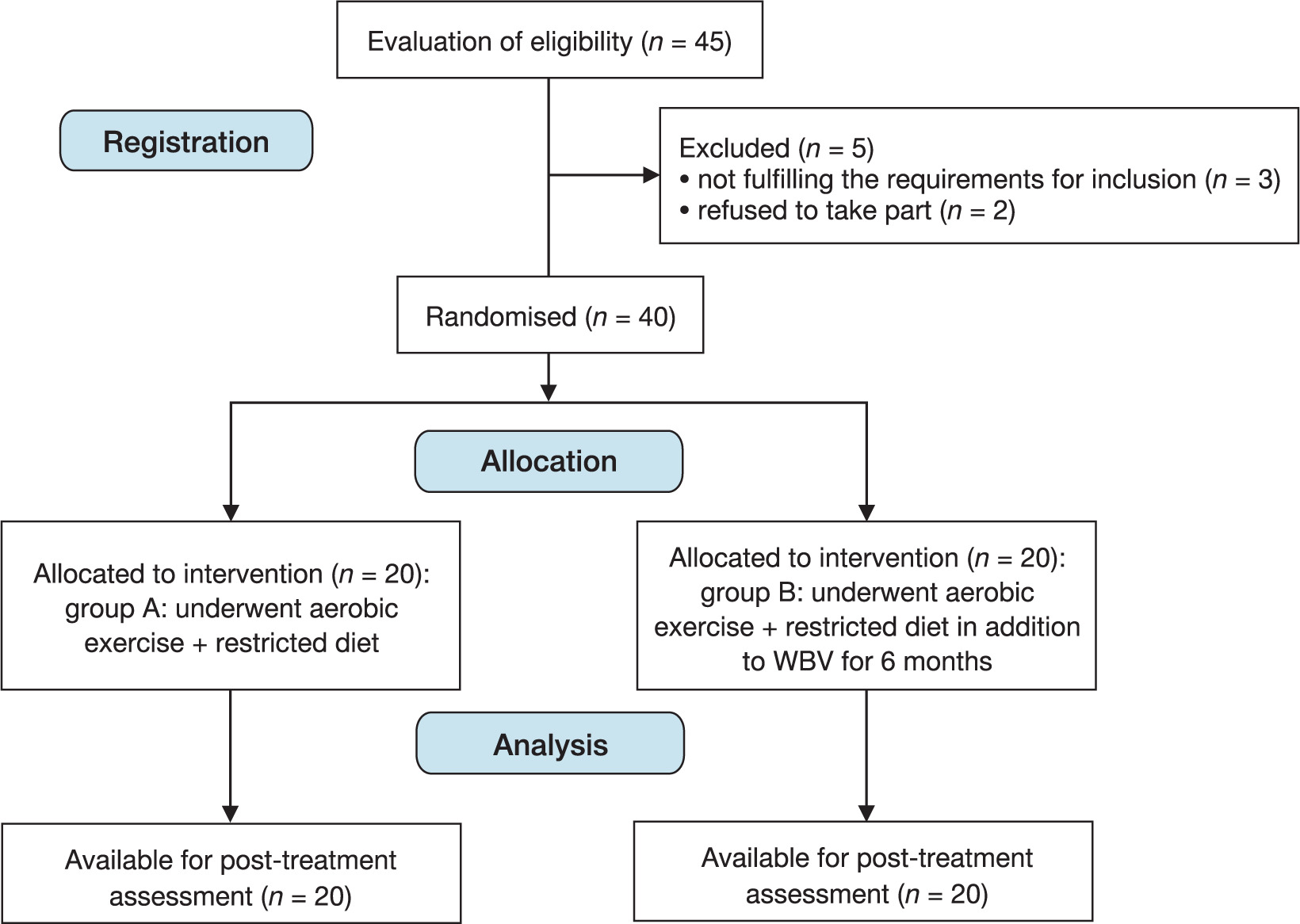
The current study included forty postmenopausal women who were obese and had high levels of IR. The required sample size for this study was determined using the G*POWER statistical software (version 3.1.9.2; Franz Faul, Universität Kiel, Germany). A pilot study was conducted on five postmenopausal obese women to estimate the effect size based on changes in HOMA-IR levels. With a power of 80%, an effect size of 0.91, and a significance level of = 0.05, the analysis revealed that 20 participants per group was required to detect a statistically significant difference between the groups. Obese women were chosen at random from the October 6 University Hospital Physical Therapy Department. The research was carried out between December 2023 and May 2024. The chosen sample satisfied the following prerequisites: ages between 50 and 60, a BMI over 30 kg/m2, and a HOMA-IR diagnosis of IR greater than 1 [29, 30]. Twenty obese women were randomly allocated to the control group, which consisted of a moderately limited diet made up of moderate amounts of fat, protein, and carbohydrates, and aerobic exercise for six months. The experimental group comprised 20 women who received the same program to the control group (6 sessions per week for 6 months) along with the WBV technique [29–30].
Eligibility criteria
The following were among the exclusion criteria: The study eliminated the following groups: (a) women with a BMI under 30 kg/m2, (b) cardiopulmonary illnesses, (c) diabetes mellitus, (d) cancer, (e) severe bleeding, (f) acute viral disease and mental disorders, and (g) smokers and those with life-threatening conditions such as renal failure.
Before randomisation, five postmenopausal women were removed; three because they did not match the qualifying requirements, and two chose to withdraw their consent and stop participating in the trial. Using the envelope approach, the postmenopausal women were randomly divided into two equal groups. Cards with the words ‘diet and exercises’ or ‘diet, exercises and WBV’ were sealed in envelopes after the ladies accepted to participate in the experiment. A blindfolded physical therapist then chose one envelope for each participant. The women were classified according to the card that was selected. After the first week of randomisation, the assigned therapy was initiated on specified dates. The examiner physical therapist did not participate in the randomisation process and was not notified of the therapy allocation. The women were asked to conceal their therapy assignment from the physical therapist during the evaluation procedure. The participants were told to report any side effects during the course of the medication (Figure 1).
Procedures Evaluation procedures
Before the experiment began, a thorough physical examination and a review of each woman’s medical history were conducted for both groups.
1. Body mass index
BMI was measured using a weight and height scale. The following equation was used to calculate the BMI based on measurements of height and weight: BMI for both groups is equal to weight/height2 (kg/m2), both before and after the 6 months of therapy [31].
2. Waist circumference measurement
The waist circumference of both groups was measured before and after the treatment using a non-stretchable tape measure at the end of a moderate expiration, with the arms relaxed at the sides, halfway between the lower border of the lowest rib and the top of the lateral iliac crest [29].
3. Skinfold thickness
Each woman in both groups A and B had their abdominal skinfold thickness measured using a skinfold calliper both pre and post 6 months of therapy [30].
4. Examination of blood (the HOMA-IR)
After a 12-hour fast, a 5-millilitre venous blood sample was obtained from each woman. Using the HOMA-IR equation, this blood was used to detect IR and measure the blood glucose and insulin levels during the fast.
Treatment procedures
1. Diet protocol
Both groups were given the following moderately restricted diet for six months: low carbohydrate, moderate protein, and moderate fat. Each woman’s basal metabolic rate (BMR) was determined using the following formula: BMR (measured in Kcal/day) = 10 × weight (kg) + 6.25 × height (cm) – 5 × age (years) – 161 [34]. The Activity Multiplier table [35] was also used to estimate each woman’s Total Daily Energy Expenditure (TDEE) based on her activity, and caloric diet control was used to gradually reduce each woman’s TDEE requirements by 20–30%. Dietary planning was done in the form of a menu that focused on the requirements for protein (20– 25% of daily energy), fat (20–25% of daily energy), and carbs (45–50% of daily energy). This high-fibre diet should include four to five meals a day, with one meal every three hours. However, items with a high glycaemic index should be avoided, and two litres or more of water should be consumed every day. To prevent any deterioration in health, weight reduction should not exceed 4 kg per month (0.5–1 kg per week) [36].
2. Aerobic exercise protocol
The women in the Aerobic Exercises (AEs) group performed 3 weekly sessions of aerobic cycling for 24 weeks. Each session lasted from 30 to 45 min of moderate-intensity cycling using a Swedish cycle ergometer (MONARK 818E) with a training zone ranging from 65% to 75% of HRmax. Compliance with the predetermined intensity of training was maintained by using a fingertip pulse oximeter to continuously monitor the heart rate. Each session was initiated with 10 min of warm-up in the form of light cycling. The active phase of the training was followed by 5 min of cool-down in the form of stretching exercises. Following a progressive schedule of training, the 24 weeks of training were divided equally into three phases. The session length in each of these three phases started at 30 min and was raised progressively to 45 min. AEs were conducted between weeks 1 and 8, at 65% to 68% of HRmax. The exercise intensity was raised to be between 69% and 72% of HRmax over the next 8 weeks, whereas the highest intensity from 73% to 75% HRmax was targeted during the final 8 weeks [37].
3. Whole body vibration
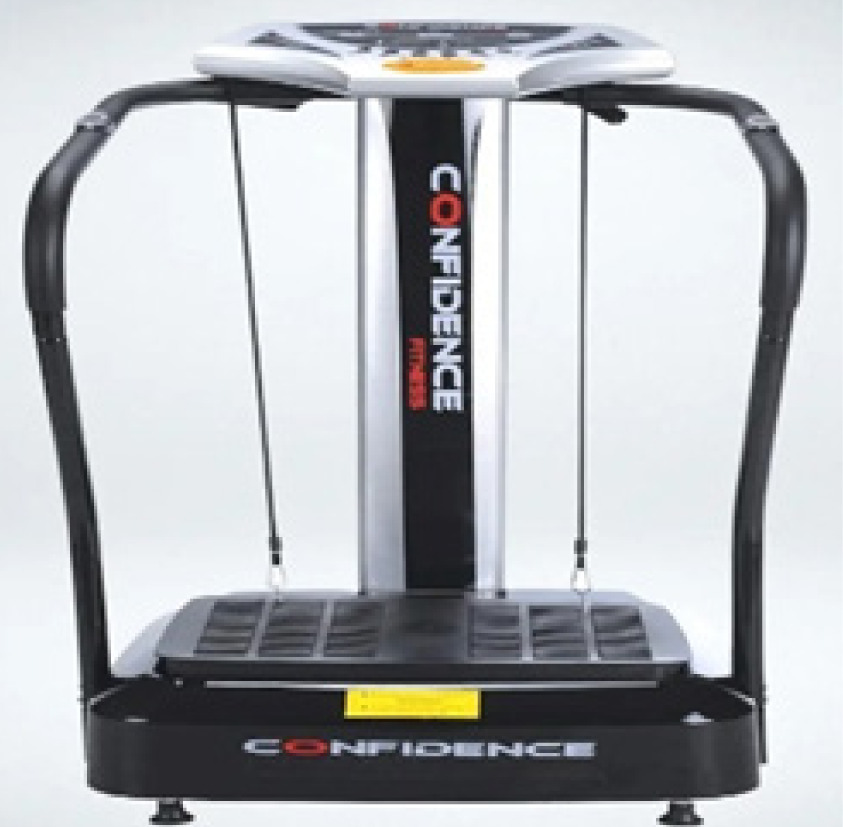
The woman positioned herself on a side-to-side vibration platform in a full squat. The device was configured to run for five minutes at a frequency of 30 Hz and an amplitude of 2 mm. After turning on the vibration, the women were told to stay in the squatting position while holding the handrail, and to report any discomfort that could occur. The vibration automatically stopped after five minutes. The women then rested for one minute. After that, they were asked to stand on the vibrating platform for another five minutes while using the same settings as when squatting. Therefore, ten minutes were allotted to WBV in each session [38] (Figure 2).
Statistical analysis
An unpaired t-test was performed to compare the subject characteristics between groups. The Shapiro-Wilk test was done to ensure that the data followed a normal distribution. Levene’s test for variance homogeneity was applied to determine group homogeneity. A mixed-model MANOVA was used to investigate how the treatments affected the BMI, waist circumference, skinfold thickness, FBG, fasting insulin, and IR. The Bonferroni correction was applied in post-hoc testing for subsequent multiple comparisons. The significance criterion for all statistical tests was p < 0.05. All statistical analyses were conducted using IBM SPSS (Chicago, IL, USA) version 25 for Windows.
Results
Demographic data
Forty subjects participated in this study. The mean ± SD age of the experimental group was 53.85 ± 2.83 and in the control group was 54.20 ± 3.17 years. The BMI was 39.23 ± 3.02 kg/m2 in the experimental group and 39.11 ± 1.12 kg/m2 in the control group. Statistical analysis revealed no significant differences between groups for age (p = 0.72), BMI (p = 0.87), waist circumference (p = 0.52), or skinfold thickness (p = 0.15), indicating that the two groups were comparable in their baseline characteristics (Table 1).
Table 1
Comparison of subject characteristics between experimental and control groups
Effect of treatment on all parameters
A mixed MANOVA was conducted to evaluate the effects of treatment and time on your dependent variables. The results revealed a significant treatment by time interaction effect, F(df between, df within = 141.06, p = 0.001, partial eta2 = 0.96, indicating that the impact of the treatment depended heavily on the specific time point. Additionally, there were significant main effects of treatment, F(df between, df within= = 1865.89, p = 0.001, partial eta2 = 0.99, and time, F(df between, df within = 17.56, p = 0.001, partial eta2 = 0.76.
Within-group comparison
Both the experimental and control groups showed statistically significant improvements in all measured parameters after the intervention (p < 0.001). In the experimental group, the BMI decreased to 31.28 ± 2.68 kg/m2, waist circumference to 95.45 ± 5.75 cm, and skinfold thickness to 36.80 ± 1.91 mm. Similarly, the FBG was reduced to 75.95 ± 2.31 mg/dL, fasting insulin to 10.71 ± 0.97 µU/mL, and HOMA-IR to 2.13 ± 0.28.
The control group also demonstrated significant reductions in BMI to 33.83 ± 1.52 kg/m2, waist circumference to 101.25 ± 7.65 cm, and skinfold thickness to 44.55 ± 1.36 mm. FBG dropped to 88.60 ± 3.60 mg/dL, fasting insulin to 12.75 ± 1.18 µU/mL, and HOMA-IR to 2.56 ± 0.33 (Table 2–3).
Table 2
Mean BMI, waist circumference and skinfold thickness pre- and post-treatment of experimental and control groups
Table 3
Mean FBG, fasting insulin and IR pre- and post-treatment of experimental and control groups
Between-group comparison
After the intervention, the experimental group showed a significantly greater decrease than the control group in all measured variables: BMI (MD = −2.55, p < 0.001; Cohen’s d = 1.17), waist circumference (MD = −5.80, p < 0.01; Cohen’s d = 0.86), skinfold thickness (MD = −7.75, p < 0.001; Cohen’s d = 4.67), fasting blood glucose (FBG) (MD = −12.65, p < 0.001; Cohen’s d = 4.17), fasting insulin (MD = −2.04, p < 0.001; Cohen’s d = 1.89), and HOMA-IR (MD = −0.43, p < 0.001; Cohen’s d = 1.39) (Tables 2–3).
Discussion
The current study set out to ascertain how total body vibration affected IR in postmenopausal obese women. The current study’s findings showed that the experimental group considerably improved all evaluated parameters, including BMI, waist circumference, skinfold thickness, FBG, fasting insulin, and IR. The significant reduction in IR in both groups might be due to the impact of diet and the regular program. According to Larson-Meyer et al. [39], calorie restriction alone or in conjunction with exercise was found to produce comparable reductions in visceral fat, body weight, and total body fat in overweight women. However, among those who exercised, there was a statistically significant improvement in insulin sensitivity [39].
Also, the improvement in both groups is supported by Donnelly et al. [40], who state that decreasing adiposity markers such as visceral fat, fat mass, total fat percentage, and waist circumference could be achieved with exercise training. The changed energy balance that occurs during exercise and in the post-exercise period as the body recovers is a possible method for decreasing IR [40].
The aerobic exercise program for postmenopausal women in this study is in line with Schwingshackl et al.’s [41] findings that, when compared to resistance training, aerobic training is highly beneficial in reducing body weight, fat mass, and waist circumference in people with a BMI 25 kg/m2 [41].
The current research findings align with Greendale et al. [42], who highlighted that menopausal women who train regularly benefit in the short and long terms. The treatment of menopausal symptoms, including weight problems, fasting blood sugar, and insulin, are among the short-term advantages [42].
According to Gian et al. [43], who proposed that WBV training is an efficient means of enhancing physical fitness in obese women, obese postmenopausal women showed greater improvement after applying WBV when comparing the findings between the two groups. WBV alone may enhance growth hormone (GH) release and lactate generation, according to research on the acute effects of WBV alone or in combination with squatting on GH levels and lactate concentrations in obese women. In order to reduce glucose and protein oxidation, the anabolic hormone GH stimulates the production and oxidation of free fatty acids [44].
The current study also agreed with the randomised clinical trial by Narges et al. [45], who stated that aerobic exercise training promotes the effectiveness of medical treatment in type 2 diabetes mellitus. As the exercise protocol was effective in lowering plasma glucose (p = 0.05), insulin levels (p = 0.000) and insulin resistance (p = 0.02) [45].
According to Rigamonti et al. [46], WBV has become more popular as an alternate kind of exercise for increasing physical performance and fitness in both obese and non-obese participants, which supported the improvement of all indicators in the control group. Furthermore, it is widely known that a single WBV session increases anabolic hormones in persons who are overweight and elderly [46].
Chi-Chang et al. [47] showed that in diet-induced obesity, WBV may have a favourable impact on exercise capacity, fat accumulation, body weight, and biochemical evaluations linked to obesity. In light of the current findings, nutrition management in conjunction with vibration exercise may be used in the future to address weight control, which is a significant concern in contemporary culture, particularly for the obese population that finds it difficult to withstand intense aerobic exercise, which concurs with the current study’s findings [47].
Our findings supported those of Wilms et al. [48], who found that WBV and endurance training can considerably enhance resting energy expenditure and body composition. Exercise with vibration has garnered a lot of interest as a way to increase the metabolic rate and trigger muscle adaptation, both of which may be useful in weight loss [48].
It has also been shown that WBV exercise lowers blood glucose levels without altering insulin or glucagon concentrations. This suggests WBV training is a promising adjuvant strategy in the treatment of obese women [49]. Di Loreto [50] disagreed with the current results and suggested that the experimental group’s notable improvement may have been caused by the use of WBV [49, 50].
The significant decrease in IR in the experimental group agreed with Piche et al. [51], who suggested that better glycaemic management is vital for postmenopausal women, whose hormonal changes result in IR [51]. Additionally, Bellia et al. [52] found that insulin sensitivity increased by 35% following eight weeks of WBV training combined with static squats [52].
A weight reduction was always observed when the WBV treatment lasted 10 weeks or more. The association between the intervention settings and the extent of weight loss is unclear: exercises performed on the plate varied between studies; side-alternating vibrations below 16 Hz produced small-to-moderate weight loss, as did 40–60 Hz synchronous vibrations (amplitude: 2–5 mm); conversely, larger weight loss was obtained with 30–35 Hz vibrations and after 6 weeks of WBV treatment at 30–35 Hz (amplitude: 2 mm) [53].
Even when the body weight remained unchanged, WBV treatment often induced a remodelling of body composition: reduced fat mass and visceral adipose tissue were observed with 8-week interventions or shorter, and with daily exposure to vibrations from 5.1 to 12.7 ms2. Fat mass loss was concentrated in the trunk, as proven by a reduction of visceral adipose tissue and waist circumference [54].
Three factors may contribute to fat mass reduction: the acute exposure to vibrations activates the central sympathetic nervous system, whose innervation of white adipose tissue triggers lipolysis; WBVT enhances glycemic control by improving insulin action and glucose regulation; WBVT promotes GH release, which stimulates metabolism and is usually reduced in obese subjects [55].
According to Shehata et al. [56], who indicated that WBV training integrated with a calorie-restricted diet could potentially lower waist circumference, Waist Hip Ratio (WHR) and Visceral Adipose Tissue (VAT) more effectively than aerobic exercise. In addition to this, Shehata et al. [56] also concluded that whole-body vibration reduces body fat.
The mechanism by which WBV has a favourable effect on IR may be attributed to the neurogenic enhancement and muscular activation caused by WBV stimuli: these give rise to functional and structural tissue adaptations over time by increasing blood flow and circulation and stimulating muscular contractions, as described by Cardinale and Bosco [57]. Consequently, decreased IR is observed. Studies have also demonstrated that WBV exercise enhances fat-burning rates and calorie burning, which could positively affect adipose tissue and improve IR [58]. This conclusion agrees with our results.
Finally, WBV is an effective intervention in the treatment of obese postmenopausal women, which is consistent with Cusi et al. [59], who stated that WBV may help obese people’s blood glucose levels return to normal, but further research is undoubtedly needed to assess the effects of both acute and chronic WBV in a wider group of obese people. However, our findings imply that acute WBV induces modifications in glucose metabolism that could potentially lead to sustained enhancements in glucose management in individuals of both normal and obese weight [59].
Conclusions
Insulin resistance was considerably improved in obese postmenopausal women who received WBV training in conjunction with a low-calorie diet and exercise regimen, as opposed to those who only received the diet and exercise interventions.
Recommendations
This study demonstrated that WBV training, combined with a low-calorie diet and exercise regimen, improves IR in postmenopausal obese women more than these regimens alone. WBV should therefore be recommended for postmenopausal women as a component of a rehabilitation regimen. Obese postmenopausal women with increased IR may benefit from the study’s findings.