
Introduction
The American Academy of Otolaryngology – Head and Neck Surgery Task Force on Rhinosinusitis defines sinusitis as an inflammatory condition affecting the paranasal sinuses [1]. The prevalence of chronic rhinosinusitis in India is notably high, with this study indicating it accounts for 46.1% of rhinosinusitis cases among 3,883 patients. However, comprehensive statistical data on its overall prevalence in India remains scarce [2]. The maxillary sinus is most frequently affected, followed by the ethmoid, frontal, and sphenoid. Rhinosinusitis is classified as acute, subacute, chronic and recurrent, where acute rhinosinusitis lasts for less than 4 weeks, sub-acute lasts for 4 to 8 weeks and chronic lasts longer than 8 weeks, while recurrent consists of 3 or more episodes of acute sinusitis per year [3]. It is more common in females aged between 18 and 64 years, with more prevalence in patients with comorbidities such as asthma, chronic obstructive pulmonary disease, and allergies [2]. Rhinosinusitis presents with clinical manifestations such as nasal discharge, facial pain, severe headache, fever, decreased sense of smell, cough, ear pain, and pressure [3, 4]. The term chronic rhinosinusitis (CRS) refers to a long-standing sinus infection that lasts for months or years, and the most important cause of CRS is the incomplete resolution of acute rhinosinusitis. Bacteria that affect sinuses include a variety of mixed aerobic and anaerobic organisms [3]. A biofilm is produced as a result of the CRS infection, and this biofilm might play a significant role in the pathogenesis and persistence of chronic rhinosinusitis [5]. Erythromycin is the metabolic product of a strain of Streptomyces erythreus and is effective against gram-positive cocci and intracellular pathogens such as Chlamydia and Mycoplasma. It has been found that the erythromycin concentration at the site of inflammation will have a larger impact on the healing process than the systemic side effects of erythromycin [6]. Fusidic acid is a bactericidal antibiotic that prevents the transfer of amino acids from aminoacyl-sRNA to protein on the ribosomes, hence preventing the production of bacterial proteins, and it is effective against Staphylococcus aureus and Streptococcus species [7].
Several different treatment modalities are available in physical therapy for rhinosinusitis, such as various electro-therapy modalities like ultrasound, shortwave diathermy, manual drainage methods, suboccipital release for sinus headaches, kinesio taping, nebulisation, neck muscle stretching, dry needling, and rhino flow therapy [8, 9].
Therapeutic ultrasound is the most widely used physio-therapeutic agent in the treatment of rhinosinusitis [9]. Ultra-sound parameters that influence thermal and non-thermal effects include frequency, intensity, mode (continuous or pulsed), and duration of application. Higher frequencies (3 MHz) target superficial tissues, while lower frequencies (1 MHz) penetrate deeper. Continuous mode increases the thermal effects by raising the tissue temperature, enhancing blood flow and tissue extensibility. Pulsed mode minimises the heating and emphasises non-thermal effects like cavitation and acoustic streaming, which increase cell membrane permeability. Phonophoresis is an advanced, non-invasive physiotherapeutic procedure that involves the use of therapeutic ultrasound to enhance transdermal drug delivery by increasing skin permeability through ultrasonic waves, avoiding systemic side effects. In phonophoresis, these parameters impact drug delivery: thermal effects improve skin permeability through vasodilation, while non-thermal effects facilitate the movement of drug molecules across the skin barrier, enhancing transdermal absorption. Drugs used in phonophoresis are usually anti-inflammatory or antimicrobial agents in topical form. Erythromycin and fusidic acid, as used in this study, exert antibacterial effects by inhibiting bacterial protein synthesis, making them suitable for managing infections such as CRS [10, 11].
The anti-inflammatory properties demonstrated by ultra-sound therapy are known to augment drainage from sinuses and in mucosal oedema reduction, thus providing symptomatic relief. EMP in combination with ultrasound therapy (UST) presents as an emerging approach for chronic sinusitis management by rendering enhanced drug delivery and also addressing the infections associated with the formation of bio-films [12].
EMP has resulted in the full remission of symptoms with a resolution of the maxillary and ethmoidal sinus opacification on computer tomography (CT) scans along with an overall improvement in QoL [13]. On the other hand, topical use of fusidic acid has shown its clinical effectiveness on skin conditions as it also possess an antibiotic effect [14]. According to the literature, additional research is needed in exploring the use of topical fusidic acid. Erythromycin phonophoresis (EMP) and fusidic acid phonophoresis (FAP) differ in their effectiveness and feasibility for managing CRS, with both treatments expected to improve symptom remission, sinus clearance, and quality of life, but the comparative efficacy and practicality of topical fusidic acid phonophoresis require further investigation. Hence, the current study was conducted to determine the comparative effect between FAP and EMP and their feasibility in the management of CRS.
Subjects and methods
Study design and setting
A double-blinded randomised clinical trial was conducted on individuals diagnosed with CRS between March and November 2024. Patients diagnosed with CRS by an ENT specialist were referred to the physiotherapy department, and written informed consent was obtained. The study adhered to Indian Council of Medical Research (ICMR) guidelines and the Helsinki Declaration (1975) [15, 16]. Reporting followed the CERT and Template for Intervention Description and Replication (TIDieR) checklists.
Eligibility criteria
Before enrolling the patients in the trial, individuals were selected based on the inclusion and exclusion criteria. Individuals aged between 19 and 50 years suffering from CRS who were referred by the ENT department and had tender points in the frontal and maxillary sinus area were included. Individuals who had any metal implants in or near the treatment area, head/neck tumours, allergic skin, known erythromycin and fusidic acid allergies, a history of low blood pressure, or neurological/cognitive impairments were all excluded from the study.
Sample size calculation
Sample size was estimated using the formula
based on the mean difference in quality of life outcomes between the first and second groups (d = x1 – x2 = 20.49), with standard deviations of 34.2 in the first group and 23.7 in the second group (pooled SD used for estimation). Parameters included 80% power (1 – = 0.80) and a 5% significance level ( = 0.05). This yielded a sample size of 32, accounting for a 10% dropout rate.
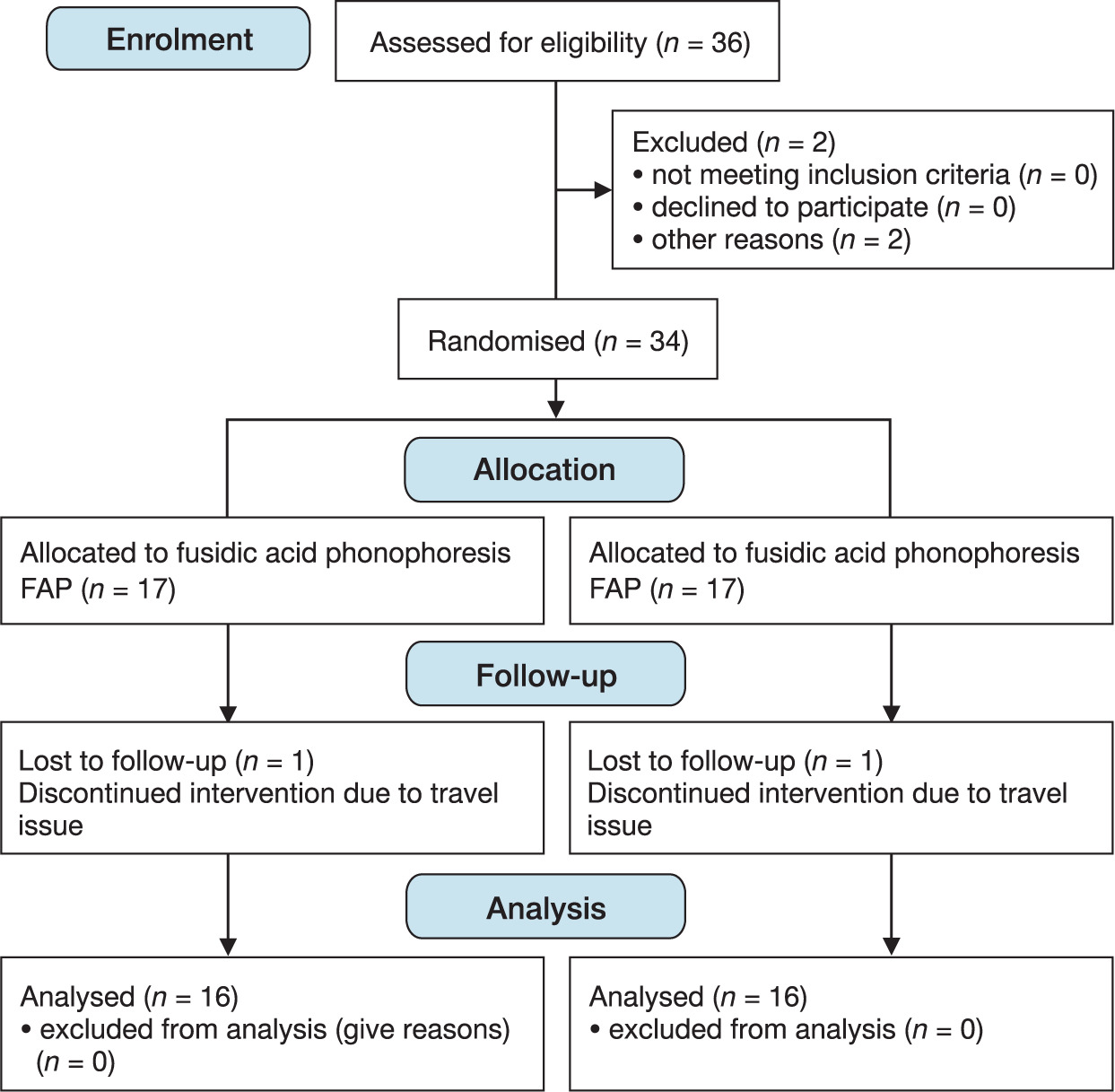
All the individuals were randomly allocated using a 1:1 ratio (computer-generated randomisation) with 16 individuals in each group. Several strategies were employed to minimise participant dropout in the study, including clear and comprehensive communication during the informed consent process to ensure participants fully understood the study’s purpose and procedures. Flexible scheduling and reminder systems were also implemented to accommodate participants’ availability and help reduce missed appointments (Figure 1).
Procedure for outcome measures
Outcomes were assessed at baseline on day 1 and on day 10, following the intervention. Both the participants and the assessors were blinded to the intervention. Patients were randomly assigned using the envelope method into two groups and received the intervention over 10 sessions, three times per week.
SNOT-22 (sinonasal outcome test)
A self-administered questionnaire used to assess the quality of life of an individual’s suffering from sinusitis, with a validity of 0.93. It has 22 components and is evaluated from 0 (worst possible symptom) to 5 (no difficulty at all). The higher the scores, the greater the severity [17].
Pain pressure threshold (PPT)
A reliable and valid tool used to determine local PPT with inter-rater reliability of 0.815–0.94 and within-session test-re-test reliability of 0.854–0.92 between measures. PPT was measured using a validated pressure algometer (Baseline® push/pull force gauge, Fabrication Enterprises, Inc., New York), applied perpendicularly (at a 90-degree angle) to the tender point (bilateral frontal and maxillary sinus) with increasing force. In frontal sinusitis, tenderness is usually localised along the bony brow ridge above the eyes, whereas in maxillary sinusitis, tenderness is commonly experienced beneath the cheekbones, just below the eye sockets. Patients were instructed to immediately report when the sensation of pressure turned into pain, at which point the pressure was stopped and the reading was recorded. The total score was determined based on the severity of the patient’s condition, with scores noted in kg/cm2 [18, 19].
Colony count using microbiology culture
The procedure was conducted to evaluate the growth of the anaerobic bacteria responsible for the CRS. Nasopharyngeal swabs were collected from CRS patients by a qualified otolaryngologist at the tertiary care hospital in the city of Belagavi. These swabs were stored in appropriate storage tubes and promptly sent to the microbiology department the same day. A qualified microbiologist, who was blinded to the allocation of participants, analysed the bacterial cultures, and reports were generated based on the colony count before and after the intervention [11].
Intervention
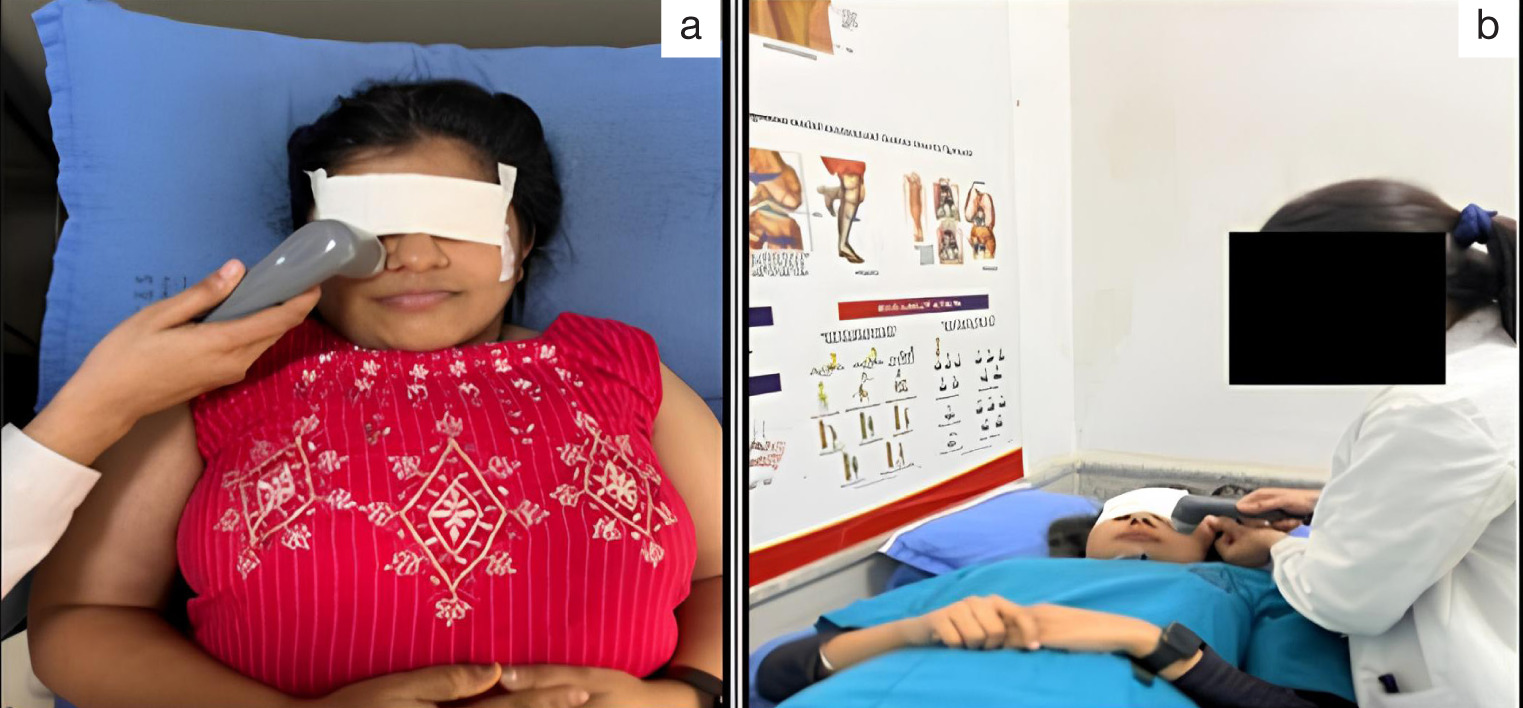
The intervention was performed by a qualified physiotherapist at the physiotherapy department of the tertiary care hospital in Belagavi over a period of 3 months. Phonophoresis was administered using a Vectrostim 100 unit (Technomed Electronics), with an effective radiating area ranging from 0.5 to 2.0 cm2. The ultrasound was delivered at a frequency of 1 MHz and an intensity of 1.5 W/cm2 in continuous mode, which corresponds to a duty cycle of 100%. Each treatment session lasted 8 minutes per sinus, with the ultrasound applied over the skin of the frontal and maxillary sinus regions, and only one transducer head was used throughout the study. Topical 2% fusidic acid ointment and erythromycin topical ointment 2% produced by a licensed pharmacist were used for phonophoresis. These ointments were coupled with ultra-sound coupling gel for proper transmission into the targeted areas.
The patients were positioned supine on a treatment table while the therapist stood at the head end of the patient. UST was applied to the skin over the cheeks for the maxillary sinus and the forehead for the frontal sinus. To protect their eyes from ointment during the intervention, patients’ eyes were covered with a layer of cotton. The same patient positioning and machine parameters were used for both groups. The difference was that the experimental group received FAP, while the control group received EMP. The intervention was administered three times a week for a total of 10 treatment sessions (Figure 2a, b) [9, 11].
Statistical analysis
Statistical analysis was conducted utilising software version 23 of the Statistical Package for the Social Sciences (SPSS) (IBM, Armonk, NY, USA). The Shapiro–Wilk test was used to assess the normality of the data, confirming that the dataset followed a normal distribution and demonstrated homogeneity of variances. As a result, parametric tests were deemed appropriate for further analysis. Descriptive statistics, including means, standard deviations, and confidence intervals, were calculated to summarise baseline characteristics and post-treatment outcomes within each group. For inferential statistics, an independent t-test was employed to compare differences between the treatment and control groups (between-group analysis), while a paired (dependent) t-test was used to evaluate pre- and post-treatment changes within each group (within-group analysis). These tests made it possible to identify statistically significant differences with a standard significance level set at p < 0.05.
Results
The study reported 2 dropouts during the study course due to personal reasons of the participants, with none of the patients reporting any adverse/side effects. Normality and variance homogeneity were checked using Shapiro–Wilk and Levene’s tests. Independent and dependent t-tests were used for between- and within-group analyses. Cohen’s d was used to calculate the effect sizes for between-group comparisons. Demographic and baseline characteristics are depicted in Table 1. The participants were homogeneously distributed with 9 males and 7 females in both groups. For all outcome measures within the experimental group (FAP), the p-value was found to be 0.0001 with a percentage change of 48.45% and an effect size of 0.72 for SNOT-22, and −17.22% with an effect size of 0.73 for PPT. In the control group (EMP), the p-value noted was 0.01 with a percentage change of 37.44% and an effect size of 0.67 for SNOT-22, and −19.19% with an effect size of 0.80 for PPT. The within-group analysis showed a significant difference in both groups with p < 0.05 (Table 2).
Table 1
Demographic characteristics of participants
Table 2
Comparison (within-group analysis) of pre-test and post-test scores of SNOT-22 and pain pressure algometer by dependent t-test
For the between-group analysis for SNOT-22 and PPT, the p-values noted were 0.40 and 0.89, respectively, thus signifying no statistical difference. The confidence interval was also found to be –6.10 to 14.60 for SNOT-22 and −0.19 to 0.21 for PPT, suggesting that neither intervention demonstrated a clinical advantage over the other (Table 3).
Table 3
Comparison (between-group analysis) of pre-test and post-test scores of SNOT-22 and pain pressure algometer by independent t-test
The pre-test of all patients in the experimental group (FAP) and control group (EMP) showed bacterial growth in the presence of commensals. In the experimental group (FAP), 9 patients reported an absence of bacterial colonies post-intervention (% change = 56.25) while 7 patients reported a reduction in bacterial colonies (% change = 43.75). In the control group (EMP), 10 patients reported an absence of bacterial colonies post-intervention (% change = 62.5), while 6 patients showed a reduction in bacterial colonies (% change = 37.5). Despite the observed reduction, the between-group comparison showed no statistically significant difference in colony count outcomes, with a p-value of 1.00. These findings indicate that both treatment protocols were similarly effective in reducing the presence of commensal organisms (Table 4).
Table 4
Comparison of group A and group B with pre-test and post-test colony counts
Both the SNOT-22 (MCID of ~8.9–9.0 points on the 0–110 SNOT-22 scale) and PPT ( 15% change from baseline) effect sizes in the experimental group (FAP) and the control group (EMP) reflect clinically relevant changes, suggesting a meaningful improvement in symptoms and pain thresholds in both groups. The magnitude of the effect is moderate-to- large and consistent with thresholds for clinical significance (Table 5).
Table 5
Between-group comparisons based on effect sizes
| Outcome parameters | Experimental group (FAP) | Control group (EMP) | Interpretation |
|---|---|---|---|
| SNOTT-22 | 0.7220 | 0.6790 | equal etfect (A = B) |
| PPT | 0.7310 | 0.8060 | equal etfect (A = B) |
Feasibility was assessed across four domains: economic factors, ease of implementation, clinical impact, and adverse events. Economic feasibility included comparing the cost of fusidic acid ointment with commonly used topical antibiotics, where fusidic acid was found to be similarly priced and accessible. Clinical impact was evaluated based on the observed antibacterial response, reduction in symptoms, and participant-reported comfort during the intervention, all of which were comparable to erythromycin. Implementation feasibility included the ready availability of the ointment and its ease of use as a coupling medium during ultrasound sessions. No adverse events were reported, and the potential side effects of fusidic acid were minimal.
Discussion
The present study demonstrated equal efficacy of both FAP and EMP in terms of SNOT-22, PPT, and bacterial analysis. The findings of the current study support the null hypothesis of the study, which indicates that both groups are equally effective in the management of CRS.
Medical management of CRS includes saline irrigation and intranasal corticosteroids as first-line treatments for symptom relief and improved quality of life, with short-course oral steroids, antibiotics for acute flares, and biologics or surgery reserved for refractory or recurrent cases. Recurrence rates remain substantial despite combined therapies, though biologics and aspirin desensitisation reduce relapse and corticosteroid dependence. Safety profiles are favourable for topical treatments and biologics, while surgical risks are low but present. Guideline adherence varies, with multidisciplinary, personalised approaches and validated patient-reported outcomes enhancing care [20, 21]. Adding physiotherapy and allied therapies to the medical management of CRS can enhance symptom relief by improving sinus drainage, reducing mucosal oedema, and promoting mucus clearance. These therapies complement medications by addressing mechanical and functional aspects, potentially improving quality of life, reducing inflammation, and decreasing recurrence rates with minimal side effects.
Effect of phonophoresis
In the present study, therapeutic ultrasound was employed for the management of CRS and its effect on biofilms. UST is progressively acknowledged as a beneficial intervention in the treatment of chronic sinusitis, specifically CRS [13]. The underlying mechanisms of its efficacy encompass anti-inflammatory properties, disruption of biofilms, and facilitation of augmented drug delivery. The subsequent sections provide a comprehensive explanation of these mechanisms. UST has been known to provide anti-inflammatory effects, which may mitigate the persistent inflammation characteristic of CRS [12]. Studies reveal that the application of UST can diminish the severity of symptoms, as demonstrated by notable enhancements in total symptom scores post-therapy [13, 22].
Bacterial biofilms pose a significant challenge in the resolution of CRS, as they frequently render conventional antibiotic therapies ineffective [22]. The antibiotic and anti-inflammatory effects of UST have been studied and proven to effectively disrupt these biofilms, thereby potentially augmenting the efficacy of simultaneous antibiotic treatments [12, 22]. UST functions by delivering mechanical energy via localized vibrations of tissue constituents. These mechanical vibrations are thought to promote the removal of purulent secretions from the sinus walls, irrespective of a viral or bacterial origin [23].
In the current study, UST was used as a medium to apply topical medication; that is, the application of phonophoresis. This method is beneficial and effective for various localised inflammatory conditions since its depth of penetration of applied medications is deeper with a faster effect. UST can enhance the localised administration of pharmacological agents via the skin, thereby increasing the concentration of therapeutic compounds at the infection site [12]. Ultrasonic waves, through their mechanical properties, possess the capability to disrupt biofilms sufficiently to augment the antibacterial activities of both drugs and bodily mechanisms [13]. The primary benefit of localised drug administration to the paranasal sinuses via phonophoresis is that it facilitates an augmentation in the rate and concentration of drug administered to the targeted area, thereby potentially improving the therapeutic efficacy of the drug. The findings of the present study agree with the outcomes of previous studies on therapeutic ultra-sound for its effect on pain and quality of life [8, 11]. The application of UST to tissues converts into heat, which in turn generates mechanical vibrations that augment blood circulation and alleviate the symptoms of sinusitis [8]. However, in contrast to the present study where phonophoresis was used, the previous studies used plain ultrasound and combined it with manual drainage techniques.
The present study demonstrates that phonophoresis using topical drug delivery leads to improvements across all measured outcomes. When combined with UST, medicated phonophoresis shows promise in managing chronic sinusitis by enhancing drug penetration and addressing biofilm-related infections. Ultrasound increases transdermal drug delivery by temporarily raising skin and mucosal permeability, allowing deeper tissue penetration of erythromycin and minimising systemic side effects [11]. This technique leverages the antimicrobial properties of topical agents like erythromycin, with ultrasound facilitating their targeted delivery. Ultrasound’s inherent anti-inflammatory effects also contribute to reduced mucosal oedema and improved sinus drainage, offering symptomatic relief [12]. Phonophoresis may be associated with rare but minimal adverse effects that include skin irritation, redness, itchiness, or sensitivity from the medication or the ultrasound gel that is used for treatment. However, no adverse event was reported by any study participant in the current study.
Comparing effects of FAP and EMP
In the current study, fusidic acid and erythromycin topical medications were compared using ultrasound therapy, and both showed equal effectiveness in all outcomes. The mechanism of action of erythromycin includes reduction of inflammation by inhibition of immunoglobulin production and modulation of cytokine expression, particularly IL-6 and IL-8. Erythromycin can alleviate symptoms by improving mucociliary transport and decreasing mucus production [7, 24]. Erythromycin has a short half-life and is acid-labile, complicating systemic administration. However, phonophoresis circumvents gastrointestinal degradation, increasing local efficacy [25]. The results of the present study are consistent with the previous findings on the efficacy of EMP. A case report aimed at evaluating the effectiveness of erythromycin phonophoresis in chronic rhinosinusitis demonstrated that erythromycin phonophoresis was effective in symptomatic relief in terms of SNOT-22 and CT scan [11]. A previous randomised clinical trial evaluated the efficacy of pulsed ultra-sound and erythromycin phonophoresis in individuals with chronic rhinosinusitis. The results of the study attested to the superiority of erythromycin phonophoresis over pulsed ultra-sound in terms of the rhinosinusitis symptom score, percentage improvement of the total symptom score, symptoms, and CT scan [13].
The use of topical fusidic acid has demonstrated notable effectiveness in the treatment of numerous inflammatory skin disorders, specifically those ascribed to bacterial infections. The distinctive properties of fusidic acid exhibit low rates of resistance and efficient penetration abilities into skin layers, thus making it a potential alternative for managing conditions like atopic dermatitis, psoriasis, and desquamative gingivitis [26, 27]. Fusidic acid, on the other hand, has advantageous topical pharmacokinetics, such as a longer half-life and robust tissue binding [28].
Fusidic acid is extremely efficient against Staphylococcus aureus, including methicillin-resistant strains, thus indicating its competency in managing infected atopic eczema and other skin infections [26–29]. The lower risk of resistance and sensitisation augment its safe utility, hence promoting it as a foremost choice of antibiotic with topical utility [14, 26]. The improvement in all the outcomes in the present study post-fusidic acid phonophoresis can be attributed to the bio-acoustic effect caused by the low-level ultrasound, which led to a reduction in bacterial growth, and the phonophoresis led to increased drug permeability. These changes in the bacterial growth, anti-inflammatory and antibacterial effects of UST and phonophoresis may have led to symptom relief, thus improving the PPT and QoL.
While both agents are accessible in many regions, the increasing erythromycin resistance and its relatively weaker efficacy against resistant strains make fusidic acid a more advantageous choice for topical application in localised infections. The effects of topical applications of fusidic acid and erythromycin in chronic rhinosinusitis differ significantly, particularly in their mechanisms and outcomes. Topical application of erythromycin for skin infections is generally well tolerated, but it can cause several local and systemic side effects, especially with prolonged use. Systemic absorption is minimal with topical use, but in rare cases, it may contribute to gastrointestinal side effects like abdominal cramps or nausea, particularly if applied over large areas or broken skin [25]. Fusidic acid is generally well tolerated with rare systemic side effects and is available in cost-effective topical formulations [26]. However, in the present study, both medications were well tolerated when topically applied, with no side effects or skin irritations reported by the study participants.
The present study demonstrated equal efficacy between FAP and EMP, likely due to their similar mechanisms of action. Both drugs are antibiotics with comparable antibacterial properties, targeting bacterial protein synthesis, which may result in similar therapeutic outcomes when used in phonophoresis. Erythromycin has a short half-life and is acid-labile, complicating systemic administration. However, phonophoresis circumvents gastrointestinal degradation, increasing local efficacy. Fusidic acid, on the other hand, has advantageous topical pharmacokinetics, such as a longer half-life and robust tissue binding.
This could explain the comparable effectiveness observed in the bacterial analysis. The phonophoresis technique also enhances the transdermal delivery of both fusidic acid and erythromycin, potentially allowing both drugs to reach the sinus tissues with similar absorption profiles. This would ensure that both therapies were equally effective in reducing symptoms, as reflected in the SNOT-22 scores and pain pressure thresholds.
Feasibility of FAP
Fusidic acid phonophoresis demonstrated strong feasibility as a complementary therapy for chronic rhinosinusitis when evaluated across economic, clinical, and practical dimensions. Economically, the therapy was feasible because fusidic acid ointment was comparable in cost to erythromycin, and its use as a topical coupling medium required no additional consumables or equipment beyond the existing ultra-sound device. This resulted in no added treatment cost for the patients or the clinic. Ease of implementation was supported by objective procedural findings: the ointment was readily available, required no modification of existing phonophoresis protocols, and could be applied easily during each of the 10 treatment sessions. Therapists reported no difficulty integrating the ointment into routine practice, indicating minimal training or workflow disruption. The clinical impact was supported by the study’s outcomes. Participants receiving fusidic acid phonophoresis showed improvements in QoL scores, increased PPT values, and reductions in bacterial presence, indicating that the therapy produced measurable clinical benefit comparable to standard topical antibiotics. The absence of participant dropout further reinforces its clinical practicality. Potential adverse events were minimal. Throughout the intervention period, no participants reported skin irritation, discomfort, or other complications, demonstrating a favourable safety profile and supporting good tolerability during repeated applications.
Overall, the combination of cost neutrality, straightforward implementation, measurable clinical improvements, and absence of adverse events provides objective evidence supporting the feasibility of fusidic acid phonophoresis as a practical and clinically acceptable therapeutic option for chronic rhinosinusitis.
Limitations
The duration of follow-up in this study might not have been sufficient to assess the long-term effects and sustainability of FAP as a complementary therapy. CRS is a long-term condition, and the effectiveness of the therapy may vary over extended periods. The bacterial profile in participants with CRS can be highly heterogeneous, which might affect the generalisability of the bacterial analysis. Variations in bacterial strains and their susceptibility to fusidic acid might influence treatment outcomes.
Conclusions
The present study concluded that EMP and FAP were equally effective in reducing bacterial colony count, tenderness, and improving symptom relief and quality of life. Clinically, this suggests that either fusidic acid or erythromycin phonophoresis can be safely incorporated as a complementary therapy in the management of sinusitis, offering non-invasive options to enhance drug delivery, reduce infection, and improve patient symptoms and quality of life.