
Introduction
Low back pain (LBP) is a widespread global condition that significantly impacts the lives of many individuals. Vos et al. [1] identified LBP in the Global Burden of Disease as a major contributor to global disability. The WHO recognised LBP as the leading cause of worldwide activity limitations and work-related restrictions. It is estimated that up to 85% of employed individuals experience LBP at some point [2]. As a result, LBP incurs substantial economic costs for individuals, families, businesses, and governments. In the United States, the direct and indirect costs of LBP are estimated to range from $100 to $200 billion annually, while in Canada, medical expenses related to LBP are projected as being between $6 and $12 billion, excluding lost work time and broader societal costs [3]. LBP is discomfort, tightness, or stiffness in the region between the posterior 12th rib and the gluteal line. NSLBP (non-specific low back pain), as classified by the National Institute for Health and Care Excellence, refers to tension, soreness, and/or stiffness in the lower back area of unclear origin, likely involving joint, disc, and connective tissue contributions. In individuals with NSLBP, the pain cannot be attributed to a specific diagnosis. It is estimated that up to 82% of individuals with isolated LBP do not receive a definitive pathoanatomical diagnosis to explain their symptoms [4, 5]. LBP is managed to improve function, with NSLBP, the most common form, often alleviated through education, comfort measures, moderate rest, activity maintenance, and pharmacological interventions. Non-pharmacological treatments such as physical therapy, targeted exercises, manual therapy, and CBT (cognitive behavioural therapy) can effectively manage subacute and CLBP (chronic low back pain), especially when integrated into a multidisciplinary approach. Subacute LBP (lasting 4–12 weeks) often responds to conservative care, while chronic LBP (lasting over 12 weeks) typically requires more comprehensive treatment due to underlying or persistent issues [6, 7].
Recent research stresses a significant gap in clinical practice guidelines, which often fail to differentiate between sub-acute and acute LBP. These guidelines typically apply treatment recommendations for acute pain (lasting no more than six weeks) to subacute cases (persisting six to twelve weeks) [8]. Many reviews aim to identify the most effective treatments for subacute LBP by evaluating clinical guidelines specific to this phase and providing targeted recommendations. These studies seek to understand the factors contributing to sub-acute LBP’s progression to chronic conditions to enhance management strategies and improve patient outcomes. Effective treatments for subacute LBP include physical therapy, targeted exercises, manual therapy, nonsteroidal anti-inflammatory drugs, muscle relaxants, and CBT [9].
NMES is a therapeutic modality used in the management of chronic LBP that delivers electrical impulses through surface electrodes to activate motor neurons, inducing muscle contractions, which enhances muscle strength, augments local circulation, and reduces disuse atrophy, thereby supporting neuromuscular re-education and functional restoration. Low-frequency biphasic pulsed currents (typically 1–100 Hz) are most commonly used in clinical NMES, offering symmetrical or asymmetrical waveforms with pulse durations ranging from 200 to 400 µs; these parameters are effective for selective motor unit recruitment with minimal discomfort. Russian stimulation (also known as Kotz currents) involves medium-frequency sinusoidal bursts (usually 2500 Hz) modulated at a lower frequency (e.g., 50 Hz), delivering more forceful contractions while maintaining greater comfort due to reduced skin impedance and are particularly effective in eliciting high-intensity muscle contractions for strengthening the deep para-spinal muscles. Interferential currents (IFC) utilise two medium-frequency currents (typically 4000 and 4100 Hz) that intersect within tissues, producing a low-frequency amplitude-modulated beat frequency (e.g., 100 Hz). IFC penetrates deeper tissues with less cutaneous discomfort and is primarily used for analgesia but also shows adjunctive benefits in neuromuscular activation [10]. The choice of current is influenced by the treatment goals (whether for pain relief, muscle strengthening, or both) and patient tolerance. In the context of subacute LBP, NMES may exert therapeutic effects through mechanisms such as reactivating inhibited para-spinal muscles, normalising motor control patterns, and reducing nociceptive input, thereby facilitating the transition from acute inflammation to functional recovery [11]. The comparative effectiveness with other complementary therapies such as acupuncture and yoga is also unclear [12]. Addressing these knowledge gaps is essential to inform evidence-based, personalised treatment strategies for improved patient outcomes. This SR assesses interventions for sub-acute LBP, identifying trends, gaps, and variations in treatment efficacy. Specifically, this review examines the effectiveness of NMES, physical therapy, pharmacological treatments, and CBT in improving patient-reported outcomes, such as pain reduction and functional improvement.
Subjects and methods
Study type and design
This SR adheres to the PRISMA 2020 guidelines (Preferred Reporting Items for SR and Meta-Analyses) [13]. It has been registered in the International Prospective Register of SR (PROSPERO) under the National Institute for Health Research (CRD 42025645610, date of registration: 15 May 2024). The SR evaluated various interventions such as NMES, structured exercise programs, multidisciplinary care, and educational interventions. The primary outcomes assessed included pain severity, functional disability, muscle endurance, and quality of life, measured using validated tools such as the ODI, NPRS and endurance tests. The search was conducted using the PICOS strategy for a population consisting of individuals with subacute LBP, interventions involving exercise-based therapy, NMES, and multidisciplinary programs, and study designs including RCTs, cohort studies, and clinical trials. Articles were screened in stages: title, abstract, and full-text review. Studies were included if they assessed exercise therapy, NMES, or multidisciplinary interventions for subacute LBP, alone or combined with other non-pharmacological treatments. The PICOS framework guided the search, focusing on the effectiveness of these interventions versus standard care in improving pain, disability, muscle endurance, and quality of life. Outcomes were analysed as continuous data due to the varying measurement tools.
Search strategy
Research articles were identified through comprehensive searches of databases from inception to 20 July 2025, including EMBASE, DocOnline, INSPEC, Cochrane SRs, CINAHL, PEDro, SportDiscus, ACP Journal Club, MEDLINE, PsycINFO, Cochrane Controlled Trials Register, and DARE. The MED-LINE and EMBASE searches followed Review Group strategies [14]. Studies on subacute LBP were assessed using the PRISMA flowchart. Screening involved a two-step process: initial title/abstract screening, followed by full-text review. A standardised Excel extraction form was pilot-tested by three reviewers on five studies. Three reviewers independently screened sources as ‘included’, ‘maybe’, or ‘excluded’, resolving discrepancies by discussion or a third reviewer. Peer-reviewed articles, expert opinions, and policy documents were eligible. References were checked to avoid duplication, and authors were contacted for missing data. The search strategy used Boolean operators and key terms such as LBP, disability, NMES, exercise-based interventions, multidisciplinary programs, pain relief, muscle endurance, and personalised management. Combinations like [LBP AND disability], [NMES AND disability reduction], and [opioid use reduction AND functional recovery] explored various treatment outcomes. Comparative terms such as [exercise therapy vs. standard care] and [conservative vs. invasive approaches] were also applied.
Study selection
The selection of studies for this SR adhered to PRISMA 2020 guidelines, prioritising randomised controlled trials, multicentric and double-blind designs, and prospective cohort studies. Full-text availability in peer-reviewed journals was required, while unpublished studies, conference abstracts, and grey literature were excluded.
Inclusion criteria
Only full-text, English-language and peer-reviewed studies were included; unpublished studies, abstracts, and grey literature were excluded. The review also included a pre-post interventional study using the ODI and a non-randomised prospective clinical trial. Outcomes like pain severity and disability were evaluated using validated self-reported tools such as the RMDQ. Studies assessing pain, disability, and overall recovery (as per each study’s criteria) were also included. Studies with concurrent leg pain were considered if they met the inclusion criteria. This aligns with recommended core outcome measures for nonspecific LBP trials, ensuring a robust methodology [15].
Exclusion criteria
The study excluded research involving participants with LBP persisting for more than 12 months, as the focus was on understanding the progression of LBP within the first year of onset, which is the critical period during which targeted interventions may yield the most significant benefits [16]. Studies involving mixed populations, such as those including patients with either neck pain or LBP were also excluded, unless LBP-specific data were excluded. Further exclusions included studies recruiting individuals with LBP secondary to other comorbidities (e.g., osteoarthritis), reporting only baseline outcomes or prognostic factors without longitudinal follow-up, and studies exclusively involving participants presenting with both LBP and concurrent leg pain [17].
Risk of bias
Risk of bias was assessed based on the Cochrane Handbook for Systematic Reviews of Interventions [18]. The Co chrane RoB 2.0 tool, PEDro, and QUIPS were used to focus outcomes like pain severity, disability, and recovery measured via validated tools such as the RMDQ. RoB 2.0 was applied to evaluate the methodological rigour across domains including randomisation, deviations from intended interventions, missing outcome data, outcome measurement, and selective reporting [19]. Studies meeting these criteria were considered low risk. Inter-rater agreement using Fleiss’ Kappa was high ( = 0.93). Summary and box plots were generated using the RoB 2.0 tool.
The PEDro scale, an 11-item tool, was used to assess the methodological quality, focusing on the internal validity (criteria 2–9) and statistical reporting (criteria 10–11). Scores range from 0 to 10, with higher scores indicating stronger quality and reduced bias. Three reviewers (KR, APKM, and KSP) independently assessed the studies using the PEDro scale, including inter-rater reliability via Cohen’s kappa. For studies not indexed in PEDro, the same scale was applied, and disagreements were resolved by consensus. Scores 5 were considered high quality, with 9–10 as excellent, 6–8 as good, 3–5 as fair, and < 4 as poor. Risk of bias was independently evaluated by four reviewers (VKJ, VIR, KR, and KSP) using the categories: ‘high risk’, ‘low risk’, ‘some concerns’, and ‘unclear’. A fifth reviewer (APKM) resolved unresolved cases. Studies with two or more high-risk items were classified as low quality [20]. This review employed a modified version of the QUIPS tool to better assess the risk of bias, ensuring the prognostic outcomes at follow-up accurately reflected the baseline population [21]. This adaptation was necessary to address the methodological challenges specific to studies tracking health trajectories. The inter-rater reliability for the QUIPS and Altman’s criteria (applied to non-RCT and cohort studies) was assessed using Cohen’s kappa coefficient, with agreement categorised from slight ( 0.20) to almost perfect ( 0.81), ensuring consistency in reviewer evaluations.
Data extraction and synthesis
The data items extracted for this systematic review were selected to provide a comprehensive evaluation of each included study. These items included participant age, study design/type of evaluation, sample size, study objective, intervention characteristics, outcome measures, and main results. To facilitate consistent comparison, these data were organised according to demographic profiles, methodological design, and treatment outcomes. A detailed synthesis of the interventions focused on treatment types, session frequencies, dosages, and the randomisation processes employed in suba-cute LBP studies. The analysis also examined the pain rating scales utilised in the studies and assessed treatment efficacy, comparing randomised versus non-randomised studies to evaluate the consistency of outcomes. A critical appraisal of methodological quality and reporting bias was also performed to contextualise the findings. The synthesised data were summarised in tabular format, highlighting the key outcome measures, effect sizes, and statistical significance for each study. This structured analysis informed the generation of practical, evidence-based recommendations for the clinical management of subacute LBP.
Statistical analysis
Quantitative data synthesis focused on evaluating outcome metrics such as pain intensity, functional disability, muscle endurance, and muscle strength. Descriptive statistics (e.g., means, standard deviations, and ranges) were used to summarise the participant demographics, intervention characteristics, and baseline and post-treatment scores. Where available, inferential statistics reported in the original studies, such as p-values, confidence intervals, and between-group comparisons, were extracted to assess the significance of observed treatment effects. To facilitate cross-study comparisons, the effect sizes were either extracted directly from the original studies or calculated using the reported means and standard deviations. The primary measure of effect size was Cohen’s d, which quantifies the magnitude of between-group differences, and the Standardised Response Mean (SRM), which evaluates within-group change over time. For each calculated or reported effect size, 95% confidence intervals were included to reflect the statistical precision and clinical relevance. Effect sizes were interpreted using conventional thresholds (small: 0.2, moderate: 0.5, large: 0.8). Comparative analyses were conducted to evaluate the relative efficacy of different intervention types-such as NMES versus PCM, or supervised versus unsupervised exercise, and to identify trends based on LBP subcategories (acute vs. subacute).
Results
Study selection
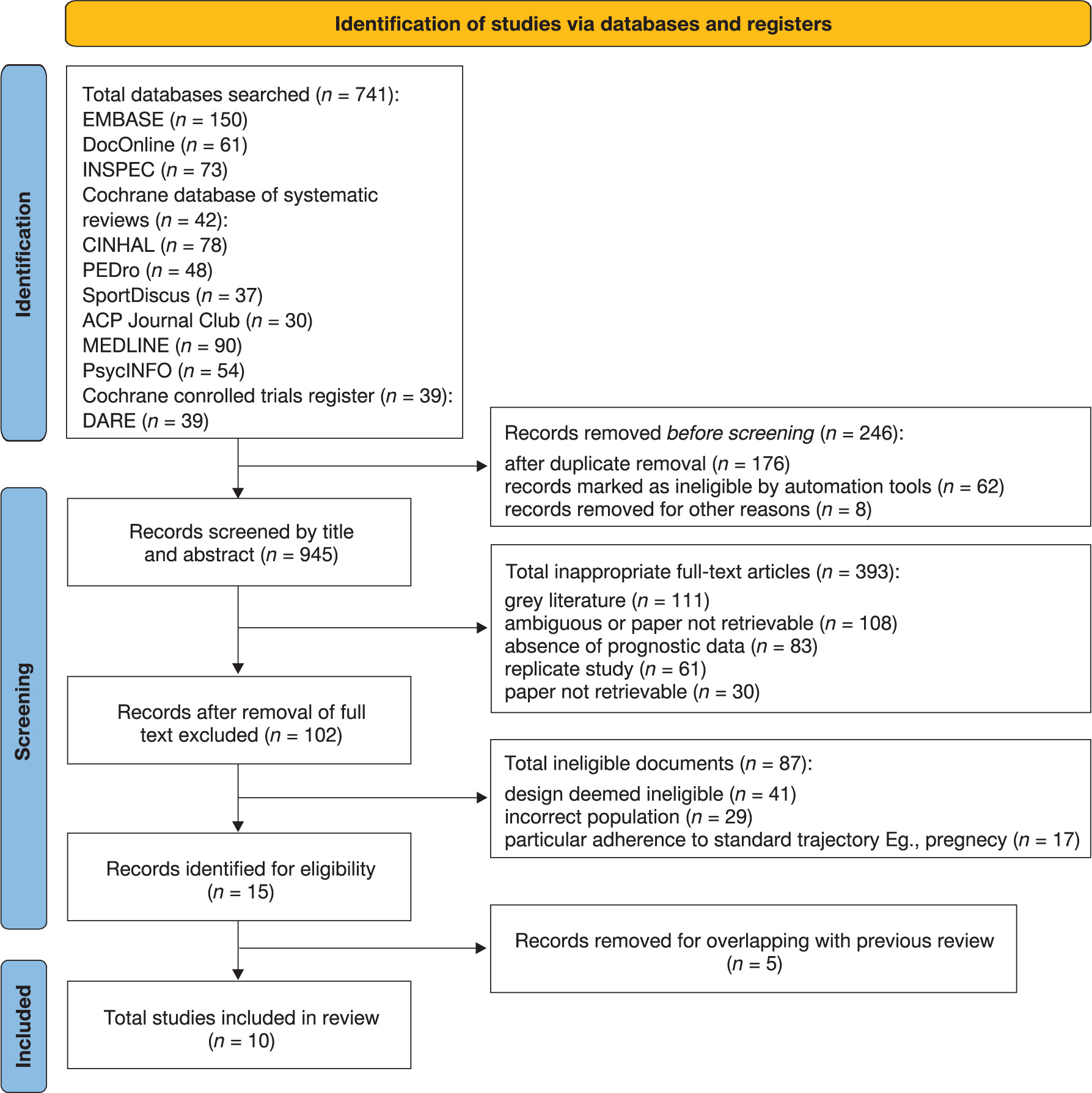
The PRISMA flowchart below outlines the selection process for studies included in this SR (Figure 1). It details the number of records identified across different databases, the screening process, reasons for exclusion, and the final number of studies included for analysis. This transparent approach ensures reproducibility and highlights the rigorous methodology in study selection.
Risk of bias
The risk of bias assessment for the included studies was conducted using the Cochrane Risk of Bias (RoB V2) tool, evaluating key methodological domains such as randomisation, deviations from intended interventions, missing outcome data, outcome measurement, and selective reporting. The figure below (Figure 2) presents the reviewers’ judgements for each criterion across all included studies, categorising them as low risk, some concerns, or high risk of bias. This assessment ensures transparency in study quality and helps interpret the reliability of the findings.
Figure 2
Risk of bias for included studies: reviewers’ judgement for each criterion is expressed as a percentage
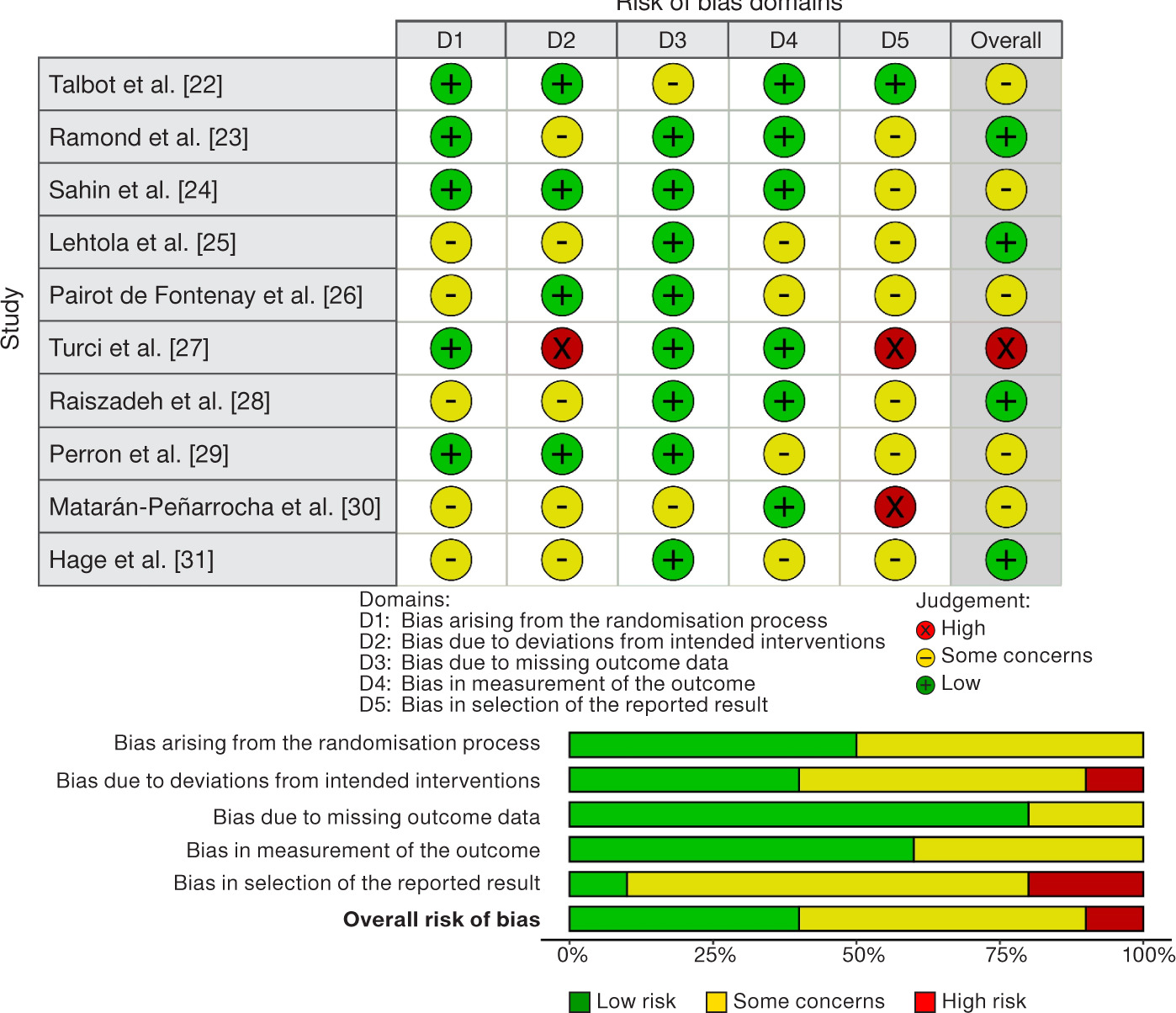
The RoB V2 assessment showed that most studies had low risk or some concerns, with few exhibiting high risk. A high-risk rating was assigned when there was clear evidence of methodological flaws, such as inadequate randomisation procedures, lack of allocation concealment, or improper blinding. It was also given when a significant proportion of the data was missing without appropriate handling or imputation, when there were major deviations from the intended interventions that could influence the study outcomes, or when there was selective reporting of results, such as omitting pre-specified outcomes, modifying primary endpoints, or presenting incomplete data that could bias the findings. The randomisation and outcome measurement were generally robust, while some concerns arose in deviations from the intended interventions, missing data, and selective reporting. Performance Bias showed almost perfect agreement (0.85), while Selection (0.72) and Detection Bias (0.78) indicated substantial consistency. Reporting (0.55) and Other Bias (0.50) had moderate to fair agreement. These values reflect a reliable and transparent bias assessment, enhancing the credibility of the findings.
PICOS Framework and PEDro Scoring
The PICOS framework was used to optimise the systematic review (SR) search strategy by structuring the study selection around the Population, Intervention, Comparison, Outcome, and Study design. This structured approach improved the precision of database searches and facilitated the identification of relevant studies. After screening titles, abstracts, and full texts, 741 articles met the inclusion criteria from multiple databases, including MEDLINE, EMBASE, Cochrane Database of Systematic Reviews, CINAHL, PEDro, PsycINFO, and others. MEDLINE contributed the highest proportion of relevant studies (14.05%), followed by CINAHL (12.17%), PsycINFO (8.42%), PEDro (7.49%), and the Cochrane Database of SRs (6.55%), highlighting MEDLINE’s comprehensive indexing and the methodological rigour of Cochrane’s sources. The PEDro scale was applied to evaluate the methodological quality of these included studies (Table 1). Most studies scored above 6, indicating high methodological quality with strong adherence to eligibility specification, random allocation, and appropriate between-group comparisons. However, variability was observed in concealed allocation, assessor blinding, and intention-to-treat analysis, with two studies scoring lower due to methodological limitations. The combined application of the PICOS framework and PEDro scoring ensured that only relevant, high-quality studies were included, thereby enhancing the rigour and reliability of the SR findings.
Table 1
Quality assessment of the included studies using the PEDro scale
| Criterion | Studies | |||||||||
|---|---|---|---|---|---|---|---|---|---|---|
| Talbot et al. [22] | Ramond et al. [23] | Sahin et al. [24] | Lehtola et al. [25] | Pairot de Fontenay et al. [26] | Turci et al. [27] | Raiszadeh et al. [28] | Perron et al. [29] | Matarán-Peñarrocha et al.[30] | Hage et al. [31] | |
| Eligibility criteria specified | yes | yes | yes | yes | yes | yes | yes | yes | yes | yes |
| Random allocation | yes | yes | yes | yes | no | yes | yes | yes | yes | no |
| Concealed allocation | yes | no | yes | no | no | yes | no | no | yes | no |
| Baseline comparability | yes | no | no | yes | yes | yes | no | no | no | yes |
| Blinding of subjects | yes | yes | yes | yes | yes | yes | yes | yes | no | yes |
| Blinding of therapists | yes | yes | yes | yes | yes | yes | yes | yes | yes | no |
| Blinding of assessors | yes | yes | yes | no | no | yes | no | yes | yes | yes |
| Measures of at least one key outcome obtained from > 85% of subjects | no | yes | yes | yes | yes | yes | no | yes | yes | yes |
| Intention-to-treat analysis of at least one key outcome | yes | yes | yes | yes | no | yes | no | no | yes | yes |
| Between-group statistical comparisons of at least one key outcome | yes | yes | no | yes | no | yes | yes | yes | yes | yes |
| Point estimates and variability provided at least one key outcome | yes | yes | yes | no | yes | yes | yes | no | yes | yes |
| Total yes score | 10 | 9 | 9 | 8 | 6 | 11 | 6 | 7 | 9 | 8 |
| Mean PEDro score | 8.3 | |||||||||
| SD | 1.53 | |||||||||
Database criteria
Study characteristics
A comprehensive database search yielded 2070 records. After removing duplicates, 741 titles and abstracts were screened, and 246 full-text articles were assessed for eligibility. Ten studies met the inclusion criteria for this SR. The PRISMA flow chart (Figure 1) details the selection process, and the study characteristics are summarised in Table 2. Data extracted included study design, sample size, demographics, interventions, outcomes, and results. The included studies were RCTs, cohort studies, and clinical trials-focused on LBP interventions across varied populations. Interventions ranged from physical therapy (NMES, TENS, ultrasound, hot packs) and structured exercises to supervised/home-based rehabilitation, back school programs, passive mobilisations, integrated practice units, and professional training. Results showed improvements in pain, disability, and function. NMES improved physical performance; back school and coordinated care enhanced outcomes; specific exercises offered modest benefits. While trunk endurance tests were weakly responsive, a 6-week program improved disability. Both self-stretching and motor control exercises were effective. Multidisciplinary programs reduced pain, disability, and opioid use. Supervised exercise outperformed non-supervised approaches, and predictive modelling identified outcome-related factors. Peak speed and DidRen Laser Test performance also improved.
Table 2
Study design and characteristics
| Study/author/ year/country | Groups | Gender | Age (years) | Type of study design/evaluation | Sample size | Study objective | Interventions | Outcome measures | Main results | Funding sources |
|---|---|---|---|---|---|---|---|---|---|---|
| Talbot et al., 2023 [22] USA | group 1: PCM group 2: NEsP, NMES (n = 43), PEP (n = 42),or PCM (n = 43) | M – 60 F – 68 | over 40 | RCT | 128 | compared NMES, PEP, and PCM in subacute LBP | PCM + physical activity + 9-week NMES | physical performance, torso strength, pain | NMES improved sit-up/ push-up performance in military personnel | TriService Nursing Research Program, U.S. Govt (Award # HU000l- 17-2-TSl0) |
| Ramond et al., 2023 [23] France | group 1: coordinated-care group (n = 200) group 2: usual-care group (n = 300) | NR | 18 and 60 | multicentric,cluster-RCT | 500 | assessed coordinated primary care for LBP disability over 12 months | training in LBP care, psychosocial factors, collaboration | disability reduction in subacute/ recurrent LBP | coordinated care reduced disability and improved pain management | French Ministry of Health (PREPS-18-0407) |
| Sahin et al., 2011 [24] Turkey | group 1: back school group (n = 70) group 2: control group (n = 76) | F – 146 | 18 and under | RCT | 146 | evaluated back school program for chronic LBP | exercise + 2-week PT (TENS, ultrasound, hot packs) + back school | pain intensity,disability reduced | programme significantly improved pain and function (VAS, ODQ) | no funding |
| Lehtola et al., 2016 [25]Finland | group 1: general exercise group (n = 31) group 2: movement control group (SMCE n = 30) | F – 70 | 48–51 | RCT | 70 | targeted exercises for individualised LBP care | Five theapist-led sessions | PSFS, ODI at 3 and 12 months | SMCE + manual therapy improved function vs. general exercise, but notshort-term pain outcomes | no funding |
| Pairot de Fontenay et al., 2023 [26] Canada | group 1: control group – lower physical activity (n = 40) group 2: test group – higherphysical activity (n = 44) | M – 84 | 35–40 | single-arm prospective trial study | 84 | assessed trunk endurance tests in LBP | core stability/ endurance program | endurance test responsiveness, modified ODI | weak responsiveness;6-week program improved ODI | OPPQ, REPAR, FRQS,Sentinelle Nord |
| Turci et al., 2023 [27] Brazil | group 1: self-stretching group 2: MCE (n = 50) | M – 32 F – 68 | 18–60 | prospective, two-arm, randomised trial | 100 | compared SaSE vs. MCE in chronic LBP | SaSE: limb control + breathing; MCE:spine stabilisation | pain, disability, fear avoidance, global etfect | both exercises equally reduced pain and disability | no funding |
| Raiszadeh et al., 2021 [28] USA | group 1: clinic-based IPU group (n = 988) group 2: web-based group (n = 102) | M – 449 F – 641 | avg. 62 | prospective cohort study | 1090 | on-site vs.web-based multidisciplinary care | C-IPU vs. O-IPU, minimum 2 extra sessions | NPRS, ODI, PSFS, opioid use | both in-clinic and web-based multidisciplinary programs etfectively reduced pain and disability; opioid use had better pain relief | Foundation for Physical Therapy Research |
| Perron et al., 2018 [29]Canada | group 1: standard care (n = 45) group 2: experimental exercise program (n = 40) | M – 85 | avg. 37 | pre-post interventional study (ODI) | 85 | Identified outcome predictors in military LBP | supervised 6-week, multi-station program | ODI, five predictive variables | 5 predictors identified; 78% accuracy; improved ODI | OPPQ and REPAR |
| Matarán-Peñarrocha et al., 2020 [30] Spain | group 1: supervised exercise (n = 32) group 2: non-supervised exercise (n = 32) | M – 32 F – 32 | avg. 53 | randomised,double-blind clinical trial | 64 | supervised vs. non-supervised therapy in non-specific LBP | supervised: lumbopelvic; unsupervised: home exercise | RMQ, ODI, SF-36 | both improved, supervised group had better pain reduction | I+D+i of Biomedical and Health Sciences in Andalusia (PC-0185-2017, PC-0267-2017 and PC-0536-2017 by European Regional Development Fund/European Social Fund |
| Hage et al. 2021 [31] Belgium | group 1: mobilisation (n = 38) group 2: control (n = 42) | M – 48 F – 32 | avg. 40 | non-randomised prospective clinical trial | 80 | role of head-neck rotation in LBP | PAIVM at painful cervical sites | NPRS, NDI, BQ, TSK, DidRen Laser Test | significant peak speed and DidRen performance improvement in LBP | INTERREG Project FWVl n° 4.7.360 |
[i] CM – Primary Care Management, NesP – neuromuscular electrostimulation program, RCT – randomised controlled trial, PEP – physical exercise programs, CLBP – chronic LBP, SRM – standardised response mean, MCID – minimal clinical important difference, SaSE – self-administered stretching exercises, MCE – motor control exercises, avg – average, PSFS – Patient-Specific Functional Scale, REPAR – Quebec Rehabilitation Research Network, ICC – intra-class correlation coefficients, OOPQ – Order of Physiotherapy of Quebec, FRQS – Fund Research Quebec-Health, IPU – inpatient unit, BS – body schema, NDI0 – Neck Disability Index, NR – not reported, M – male, F – female
In total, ten studies were included in the review. Of these, six were randomised controlled trials (RCTs) [22–25, 27, 30], including one that used a cluster-randomised design [23]. One study was a non-randomised prospective clinical trial [31], and another was a prospective cohort study [28]. Additionally, one study followed a single-arm prospective trial design [26], and one employed a pre-post interventional approach [29]. This categorisation provides a clear overview of the methodological diversity across the included studies. This review incorporated an auxiliary metric derived from the QUIPS tool and Altman’s [20] criteria assessment to refine the risk of bias evaluation [29]. Modifications to the risk of bias assessment were crucial in addressing challenges in studies on health-related condition trajectory, enhancing the reliability of the bias evaluation process. The kappa agreement values across all bias criteria demonstrate a generally consistent evaluation process among the reviewers. Performance Bias showed almost perfect agreement (0.85), indicating a strong consensus, while Selection and Detection Bias also reflected substantial agreement (0.72 and 0.78, respectively), suggesting reliable assessments with minor variations. Although Reporting Bias (0.55) and Other Bias (0.50) had moderate to fair agreement, these values still indicate that the reviewers were largely aligned, with only minor discrepancies. Overall, the results suggest a well-controlled bias assessment process, contributing to the study’s credibility.
Quantitative outcome of the studies
The reviewed studies highlight the efficacy of targeted rehabilitation strategies in enhancing physical function and reducing disability. Neuromuscular stimulation, multidiscipli-nary care, back school programs, and motor control exercises significantly improved strength, pain reduction, and disability scores. These findings support structured interventions for optimising musculoskeletal health and functional recovery (Table 3).
Table 3
Summary of quantitative findings and effect sizes in included studies
| Study | Quantitative results | Etfect sizes for each relevant variable with 95% CI | |
|---|---|---|---|
| primary outcomes | comparative findings | ||
| Talbot et al. 2023 [22] | significant improvements in muscle strength and endurance | NMES group: sit-ups (p = 0.002), push-ups (p = 0.006) PCM group: 21% strength increase | Cohen’s d = 0.7 [95% CI: 0.18, 1.22] p – not reported |
| Ramond et al. 2023 [23] | 70% of participants receiving coordinated care achieved clinical recovery | coordinated care: 70% improvement; usual care: 50% improvement (12 months) | Cohen’s d = 0.5 [95% CI: 0.22, 0.78] p – not reported |
| Sahin et al. 2011 [24] | significant pain reduction and improved function | VAS pain reduction (p < 0.05) in the back school group compared to the control | Cohen’s d = 0.85 [95% CI: 0.36, 1.34] p < 0.05 |
| Lehtola et al. 2016 [25] | significant reduction in disability | SMCE group: mean reduction of 1.9 RMDQ points; 61/70 completed 12-month follow-up | Cohen’s d = 1.9 [95% CI: 1.34, 2.46] p < 0.01 |
| Pairot de Fontenay et al. 2023 [26] | significant improvement in trunk endurance and disability reduction | ODI scores decreased from 31.6 to 18.8; SRM = 2.85 | SRM = 2.85 [95% CI: 1.97, 3.73] p – not reported |
| Turci et al. 2023 [27] | both groups improved | pain: SSE group 6.3→0.8, MCE group 6.2→0.9; disability MD at week 13: 1 (95% CI –1 to 3); week 26: 0 (95% CI –1 to 2) | Cohen’s d = 0.10 [95% CI: –0.29, 0.49] p – not reported |
| Raiszadeh et al. 2021 [28] | pain improved by 1.02 points; ODI improved by 4.26 points | 1090 participants; mean age: 62.3 years; pain: 4.96; disability: 26.92 | Cohen’s d = 0.6 [95% CI: 0.48, 0.72] p < 0.01 |
| Perron et al. 2018 [29] | significant improvements in ODI | 85 military participants; ODI improvement: favourable group 23.9 ± 11.0 vs. unfavourable group 3.4 ± 10.3 | Cohen’s d = 0.75 [95% CI: 0.31, 1.19] p = 0.01 |
| Matarán- Peñarrocha et al. 2020 [30] | supervised group reported lower pain (2.5 ± 2.1 vs. 3.5 ± 1.5) | supervised group: pain 2.5 ± 2.1; disability lower than non-supervised (pain: 3.5 ± 1.5) | Cohen’s d = 0.65 [95% CI: 0.20, 1.10] p – not reported |
| Hage et al. 2021 [31] | significant improvements in kinematic measures post-intervention | NDI scores: 22→0, pain: 6→0, kinematic ICC: 0.57-0.96; average 5 sessions | Cohen’s d = 0.75 [95% CI: 0.18, 1.32] p – not reported |
[i] NMES – neuromuscular electrical stimulation, RMDQ – Roland-Morris Disability Questionnaire, VAS – Visual Analogue Scale, LBP – low back pain, SMCE – specific movement control exercise, SSE – self-administered stretching exercises, MCE – motor control exercises, ODI – Oswestry Disability Index, NR – not reported
The review affirms the efficacy of targeted rehabilitative interventions in improving physical function and reducing disability in subacute and chronic LBP. Talbot et al. demonstrated significant gains in muscle strength and endurance with NMES and PCM, yielding moderate to large effect sizes (0.5–0.9) and enhanced performance in sit-ups (p = 0.002) and push-ups (p = 0.006). Ramond et al. [23] reported improved recovery rates with coordinated care (70% vs. 50% in usual care; d = 0.5), stressing the value of multidisciplinary approaches in-patient rehabilitation. Sahin et al. [24] showed that back school programs significantly reduced pain and disability, indicated by improvements in the Oswestry LBP Disability Index (p < 0.05), while Lehtola et al. [25] found that SMCE produced a clinically meaningful decline in disability (RMDQ change = –1.9, d = 1.9, p < 0.01).
Interventions
The reviewed studies addressed various LBP management strategies (Table 4). Talbot et al. [22] combined PCM, physical activity guidance, and a 9-week NMES program. Ramond et al. [23] used a coordinated-care approach with trained healthcare professionals, unlike the usual-care group. Sahin et al. [24] implemented a low back exercise program, physical therapy (TENS, ultrasound, hot packs), and a back school for education. Lehtola et al. [25] involved five sessions with experienced therapists in a Finnish clinic. Pairot de Fontenay et al. [26] applied a core stability and endurance exercise program. Turci et al. [27] used exercises and breathing patterns to stabilise the lumbar spine. Raiszadeh et al. [28] compared clinic-based (C-IPU) and web-based (O-IPU) rehabilitation models based on participant preference. Perron et al. [29] ran a progressive multi-station exercise program targeting lumbar and hip function. Matarán-Peñarrocha et al. [30] contrasted supervised lumbopelvic strengthening with a home-based program. Hage et al. [31] used passive inter-vertebral mobilisations for acute-subacute neck pain, focusing on painful sites identified during assessment.
Table 4
Treatments, sessions and dosages
| Study | Treatments/ description | Sessions | Dosages/details |
|---|---|---|---|
| Talbot et al. [22] | PCM | weekly communications about pain status and medication use | encouraged physical activity and minimising sedentary behaviour |
| NMES | 62 sessions (30 min each) | alternating sessions every other day (31 abdominal and 31 back sessions), settings: pulse duration: 250 µs, ramp time: 2 s on, 2 s otf – frequency: 55 Hz – duty cycle: 3 seconds on, 5 s otf | |
| PEP | 31 sessions (60 min each) | conducted on alternating days, divided into 3 phases, each lasting 3 weeks, with increasing intensity – focused on stretching and strengthening exercises for the lumbar spine | |
| Ramond et al. [23] | GPs and physiotherapists provide written summaries and auto-observation questionnaires | first session: 90 min, second session: 3.5 hours, second session activities: formal presentations on interventional components (psychosocial factors, active reeducation) | two 90-min and one 3.5-hour sessions (over a period of 2–4 weeks) |
| Sahin et al. [24] | back school group | structured program focusing on LBP education and coping skills 4 sessions total | 4 sessions totalling 2 sessions per week for 2 weeks, lasting 1 hour each |
| physiotherapy | includes various modalities tailored for pain management | 100 Hz, µs, 30 min/session, days a week for weeks therapeutic ultrasound: 1 MHz with an intensity of 1.5 W/cm2 for 5 min per session | |
| Lehtola et al. [25] | general exercise | 5 sessions | 45 min per session manual therapy: 10–15 min per session, home exercises: 3 times per week |
| SMCE | 5 sessions | 45 minutes per session manual therapy: 10–15 min per session, home exercises: 3 times per week | |
| Pairot de Fontenay et al. [26] | multi-station exercise program | 2–3 times per week for 6 weeks | 45–60 min per session |
| Turci et al. [27] | SaSE | 8 weekly sessions + home sessions | 40-min sessions sustained for 10–20 min per posture |
| MCE | 8 weekly sessions + home sessions | 40-min sessions sustained for 10–20 min per posture | |
| Raiszadeh et al. [28] | C-IPU (clinic-based) | high-intensity machine-based core muscle resistance training | prescribed and progressed based on individual needs |
| O-IPU (online) | therapist-directed home core strengthening exercises via a web-based platform | 12-week program with variable duration based on the patient’s needs | |
| Perron et al. [29] | multi-station full-body exercise program | supervised exercise program comprising 7 stations, each with exercises of increasing difficulty | 2–3 sessions per week, 45–60 min each |
| Matarán-Peñarrocha et al. [30] | supervised group | core exercise program/ 3 sessions/week | 30–35 min per session |
| non-supervised group | home exercise program/ 3 sessions per week/3 | 10–15 repetitions of each exercise | |
| Hage et al. [31] | PAIVM | mean of 4.7 sessions | mobilisation grades (1–4) are applied based on tolerance, stitfness, and discretion |
[i] PCM – Primary Care Management, NMES – neuromuscular electrical stimulation, PEP – physical exercise programs, GP – general practitioner, SaSE – self-administered stretching exercises, MCE – motor control exercises, SMCE – specific movement control exercise, IPU – Inpatient Unit, PAIVM – Passive Accessory Intervertebral Movements
Adequate randomisation reduces bias, supports group comparability, and strengthens the reliability of conclusions regarding subacute LBP therapies. It ensures that outcome differences arise from the intervention itself rather than confounders like age, sex, prior treatments, or comorbidities [32]. Various randomisation methods were used across the studies to enhance the internal validity (Table 5). Talbot et al. [22] employed sealed envelopes post-baseline, with compliance tracked via calls, emails, and texts. Ramond et al. [23] used 1:1 cluster randomisation, stratified by region and study timing, effectively blinding the participants, assessors, and analysts. Sahin et al. [24] combined sealed envelopes with computer-generated allocation and maintained blinding of the researchers and evaluators, further minimising bias [33].
Table 5
Summary of etfect sizes grouped by outcome type across included studies
| Outcome measure category (average etfect size) | Study | Specific outcome tool(s) | Acute/subacute | Etfect size | Summary of etfectiveness |
|---|---|---|---|---|---|
| Pain intensity | Talbot et al. [22] | VAS | subacute | medium–large (e.g., d = 0.7) | NMES + PEP > PCM alone in subacute LBP |
| Sahin et al. [24] | VAS | chronic→subacute | moderate (d» 0.6) | back school + exercise improved pain scores | |
| Matarán-Peñarrocha et al. [30] | VAS | both | small–moderate (d» 0.4) | home exercise improved acute/ subacute pain | |
| Hage et al. [31] | NPRS | acute-subacute neck | moderate (d »0.5) | manual therapy reduced pain | |
| Perron et al. [29] | NPRS | acute/subacute | not reported | exercise regimens personalised to patient characteristics | |
| Turci et al. [27] | NPRS | both | moderate (d »0.6) | both SaSE and MCE were etfective | |
| Raiszadeh et al. [28] | NPRS | chronic (not stratified) | moderate (d »0.6) | web-based and in-clinic therapy reduced pain | |
| Functional disability | Ramond et al. [23] | RMDQ | subacute | moderate (d 0.5) | coordinated care reduced disability |
| Lehtola et al. [25] | RMDQ, ODI, PSFS | subacute | large (d »0.8) | tailored exercises improved outcomes | |
| Turci et al. [27] | ODI | both | moderate (d »0.6) | exercise etfective in acute/ subacute LBP | |
| Raiszadeh et al. [28] | ODI, PSFS | chronic (mixed) | moderate (d »0.5–0.6) | improvements in function reported | |
| Patient-reported outcome | Pairot de Fontenay et al. [26] | GRC scale | subacute/chronic | not quantified | favourable outcomes for full-body supervised exercise |
| Lehtola et al. [25] | PSFS | subacute | large (d » 0.8)* | improved patient-specific function | |
| Movement control / sensorimotor | Hage et al. [31] | sensorimotor tests | acute-subacute | moderate (d » 0.5)* | improved sensorimotor performance |
PSFS – Patient-Specific Functional Scale, VAS – Visual Analogue Scale, RMDQ – Roland-Morris Disability Questionnaire, NPRS – Numeric Pain Rating Scale, SaSE – self-administered stretching exercises, MCE – motor control exercises, RMDQ – Roland-Morris Disability Questionnaire, ODI – Oswestry Disability Index, GRC – Global Rating of Change
Lehtola et al. [25] found that combining movement control exercises with manual therapy improved outcomes, supporting a multimodal approach. Matarán-Peñarrocha et al. [30] and Turci et al. [27] reported similar benefits from both self-directed and supervised exercise. Raiszadeh et al. [28] highlighted interdisciplinary strategies, noting in-clinic rehab slightly outperformed web-based options. Perron et al. [29] and Pairot de Fontenay et al. [26] emphasised tailored programs for physically demanding roles like military personnel, demonstrating reduced injury rates [34].
Pain Rating Scale (PRS)
The Pain Rating Scale (PRS) is a key tool for assessing lower back pain intensity, typically using a 0–10 scale. It enhances patient-provider communication, tracks treatment progress, and guides therapy adjustments [35]. Regular pain monitoring allows for personalised care and improved outcomes. Studies on subacute LBP have used diverse PRSs to evaluate treatment effects. Talbot et al. [22] and Sahin et al. [24] used the VAS for pain, while Ramond et al. [23] and Lehtola et al. [25] employed the RMDQ and PSFS to assess disability and function (Table 8). Pairot de Fontenay et al. [26] used the GRC scale, and Turci et al. [27] applied the ODI and NPRS. Raiszadeh et al. [28] combined the NPRS, ODI, and PSFS, and Hage [31] used the VAS. These varied tools capture different aspects of subacute LBP, reinforcing the need for standardised, multidimensional assessments [36].
Acute versus subacute LBP
The studies by Talbot et al. [22] and Ramond et al. [23] highlight the effectiveness of active therapies, such as NMES, PEP, and structured exercise, in subacute LBP, showing superior functional outcomes over standard care. These approaches enhanced strength, flexibility, and endurance, contributing to reduced pain and faster recovery, while Sahin et al. [24] focused on chronic LBP, the benefits of exercise, education, and physiotherapy are relevant across stages, though differing pathophysiological needs must be considered (Table 5). Lehtola et al. [25] further support a multimodal strategy, showing improved outcomes with movement control exercises and manual therapy. Matarán-Peñarrocha et al. [30] and Turci et al. [27] found self-directed and supervised exercise equally effective, enabling individualised care. Raiszadeh et al. [28] demonstrated the benefits of interdisciplinary programs, with in-clinic approaches slightly outperforming web-based models. Lastly, Perron et al. [29] and Pairot de Fontenay et al. [26] emphasised customised exercise interventions for military personnel, noting reduced injury risk and improved function.
Study analysis: key features, global recommendations, and limitations
Talbot et al. [22] reported that NMES combined with PEP produced medium-to-large pain reductions (VAS, d 0.7) in subacute LBP compared to PCM, supporting early, multidisciplinary rehabilitation, though COVID-19-related deviations, missing data, and compliance issues were noted. Ramond et al. [23] found that coordinated care moderately improved functional disability (RMDQ, d 0.5), recommending collaboration among primary care providers and structured follow-up, though recruitment imbalances may have influenced the results. Sahin et al. [24] demonstrated that back school plus exercise yielded moderate pain reduction (VAS, d 0.6), advocating structured programs despite a small sample, homemaker bias, and lack of placebo. Lehtola et al. [25] reported large improvements in disability and function (d 0.8) with tailored SMCE and manual therapy for recurrent suba-cute LBP, but pain intensity tracking was lacking, and the role of MCI as a treatment effect modifier was uncertain. Pairot de Fontenay et al. [26] highlighted supervised full-body exercise as beneficial for endurance and patient-reported outcomes, recommending individualised exercise with psychological support despite selection bias and test responsiveness concerns. Turci et al. [27] found both SaSE and MCE comparably reduced pain and disability (d 0.6), encouraging integration into rehabilitation while acknowledging their un-blinded design and limited SaSE evidence. Raiszadeh et al. [28] observed moderate improvements (d 0.5–0.6) and opioid reduction with both web- and clinic-based rehabilitation, recommending multimodal, accessible interventions, though selection bias and pragmatic design limited the conclusions. Perron et al. [29] showed that personalised exercise programs reduced pain, emphasising prognostic indicators for tailored interventions, but high dropout, low predictive accuracy, and limited generalisability were issues. Matarán-Peñarrocha et al. [30] found supervised and home-based exercise both reduced pain (VAS, d 0.4), with supervised being slightly superior, advocating for personalisation despite a lack of controls and blinding. Lastly, Hage et al. [31] reported that manual therapy reduced neck pain (d 0.5) and improved sensori-motor performance, supporting its use with standardised tools, though external validity was limited by the small, nonage-matched samples and exclusions.
Discussion
Subacute LBP, defined as pain persisting for 4 to 12 weeks after an initial injury or strain, represents a transitional stage in the natural healing process and differs from chronic LBP, which lasts beyond 12 weeks and involves ongoing tissue damage, nerve dysfunction, or maladaptive pain mechanisms. Our review highlights the significant role of non-pharmacological interventions, including exercise therapy, neuro-muscular electrical stimulation (NMES), cognitive behavioural therapy (CBT), and integrated multidisciplinary rehabilitation, in improving pain, functional outcomes, and recovery rates among patients with subacute LBP.
Exercise-based interventions remain the cornerstone of management, with studies such as those by Sahin et al. [24], Turci et al. [27], and Lehtola et al. [25] demonstrating that structured programs, including back school education, motor control exercises, and personalised training regimens, lead to substantial improvements in spinal stability, muscle strength, and physical performance.
Similarly, the integration of CBT plays a critical role by addressing maladaptive beliefs such as fear-avoidance, catastrophising, and low self-efficacy, which contribute to prolonged disability [37]. CBT facilitates adaptive coping mechanisms, improves psychological resilience, and, when combined with exercise, enhances functional outcomes while reducing the risk of chronic pain. Neuroimaging studies further support CBT’s role in modulating pain pathways by increasing prefrontal activation and reducing limbic system hyperactivity [38], highlighting its neurobiological relevance.
Active rehabilitation strategies not only enhance functional recovery but also promote anti-inflammatory responses, improve circulation, reverse muscle atrophy, and counter central sensitisation, which is particularly beneficial in high-demand populations like military personnel and firefighters [39].
NMES has emerged as a promising adjunct to conventional exercise therapy, demonstrating moderate effectiveness in enhancing deep trunk muscle recruitment, improving lumbar stabilisation, and facilitating neuromuscular reconditioning. Although much of the evidence originates from chronic LBP studies, insights are transferable, with Hicks et al. [40] showing significant improvements in multifidus activation and pain reduction through targeted NMES. Our findings suggest that, particularly in subacute cases, combining NMES with task-specific training accelerates recovery by bridging the gap between initial pain resolution and full functional restoration, potentially preventing progression to chronicity.
Furthermore, multidisciplinary care integrating physical, psychological, and educational components demonstrates superior outcomes compared to unimodal approaches, with studies by Talbot et al. [22], Raiszadeh et al. [28], and Perron et al. [29] underscoring the benefits of combined rehabilitation strategies, including web-based digital platforms that enhance accessibility and long-term adherence. Despite promising findings, several methodological limitations across some of the included studies warrant cautious interpretation, including low compliance rates, missing data, lack of placebo controls, recruitment imbalances, and limited blinding, as reported by Talbot et al. [22], Ramond et al. [23], Sahin et al. [24], Lehtola et al. [25], and Perron et al. [29].
These inconsistencies highlight the need for more rigorously designed randomised controlled trials with standardised protocols and robust outcome measures to strengthen the evidence base for non-pharmacological interventions in subacute LBP. Overall, the synthesis of available evidence suggests that early, targeted, and integrated therapeutic approaches combining active rehabilitation, NMES, CBT, and multidisciplinary strategies are most effective in improving recovery, restoring function, and preventing the transition from subacute to chronic LBP.
Limitations of SR
In the RoBV2 analysis, the kappa agreement was substantial-to-almost perfect across most domains, while the moderate-to-fair agreement for Reporting Bias ( = 0.55) and Other Bias ( = 0.50) likely reflects the inherent subjectivity in interpreting vague or inconsistently reported data in the primary studies. These domains often lack standardised operational definitions, which increases the variability in individual reviewer assessments, but all discrepancies were resolved through consensus, thereby enhancing the robustness of the final risk of bias evaluations. This methodological step supports the credibility and transparency of our assessment process despite inter-rater variability in select areas. The study’s meta-analysis was deemed infeasible due to the significant heterogeneity in the studies, including quantitative outcomes. This led to a rigorous qualitative synthesis to interpret the evidence and account for methodological discrepancies. A formal assessment of publication bias was not performed due to the insufficient studies and data variability. To enhance the methodological robustness, a comprehensive risk of bias assessment was implemented, and the PEDro scale and PICOS framework were used. Future research should employ standardised methodologies, larger sample sizes, and more homogenous study populations for more robust meta-analytical synthesis and evaluation of publication bias.
Conclusions
In conclusion, this systematic review highlights the effectiveness of exercise-based, neuromuscular, and multidisciplinary interventions in managing subacute LBP, with appreciable improvements in pain reduction, functional recovery, and muscle endurance. NMES, particularly in the early sub-acute phase, showed promise in enhancing muscle activation, while structured exercise and multidisciplinary programs incorporating physical therapy, CBT, and patient education led to superior outcomes compared to unimodal strategies. The findings support a shift from passive or pharmacological strategies towards multimodal, patient-centred interventions for subacute LBP, combining active approaches like exercise and CBT with selective use of NMES where evidence supports its benefit. However, the heterogeneity in intervention protocols and outcome measures stresses the need for greater standardisation in future research. Further studies need to aim for optimal parameters for NMES, clarify the role and timing of CBT integration, and evaluate the long-term efficacy and cost-effectiveness of combined approaches. Future research needs to focus on standardising NMES protocols, evaluating long-term outcomes and the sustainability of combined interventions, optimising CBT integration, and assessing cost-effectiveness. These efforts will help fill existing gaps and strengthen the development of comprehensive, patient-centred treatment models for subacute LBP.